Hey there, Virginia drivers!
If you’ve ever glanced at that little sticker on your windshield and thought, “Wait… was it really a year ago already?” — you’re not alone. The annual Virginia State Inspection sneaks up on all of us. But don’t worry! At Sandston Automotive, we’ve got your back, your brakes, your tires… basically, all of it.
📌 Quick Disclaimer (Because Laws Like to Change)
Virginia inspection laws, procedures, and requirements can change from time to time. While we do our best to share accurate, helpful information, this post is meant to prepare you for your inspection and for general education only. For the most up-to-date and official requirements, always refer to the Virginia Code and the Virginia State Police Safety Inspection Manual, or speak directly with a Virginia State Inspection Officer.
Translation: when in doubt, trust the rulebook — not just the blog 😉
✅ What is the Virginia State Inspection?
In short:
It’s a yearly safety check required by the Commonwealth of Virginia to make sure your vehicle is safe, road-worthy, and not secretly plotting to strand you on I-95 at rush hour.
There are 24 inspection points, and while that sounds like a lot, think of it more like a thorough spa day for your car — minus the cucumber water.
In Detail: Two Types of Inspections
Virginia requires two main types of inspections for many vehicles:
- Annual Safety Inspection: Almost all vehicles registered in Virginia must pass a safety inspection every year. Code of Virginia Article 21. Safety Inspections
- Emissions Inspection: Only required in certain counties/cities* and only for specific vehicles (mostly newer, lighter gasoline- or diesel-powered passenger or property-carrying cars). Virginia DMV Emissions Inspection
*If you live outside of emissions-testing areas (mainly Northern Virginia), like here in Central Virginia, (or drive an older, exempt vehicle), then you only need the safety inspection
🛠️ What Gets Checked During Your Safety Inspection
Inspection stations and Inspectors are certified and regulated by the Virginia State Police.
Check out the VSP list here to prepare for your visit 👉 Vehicle Safety Inspection
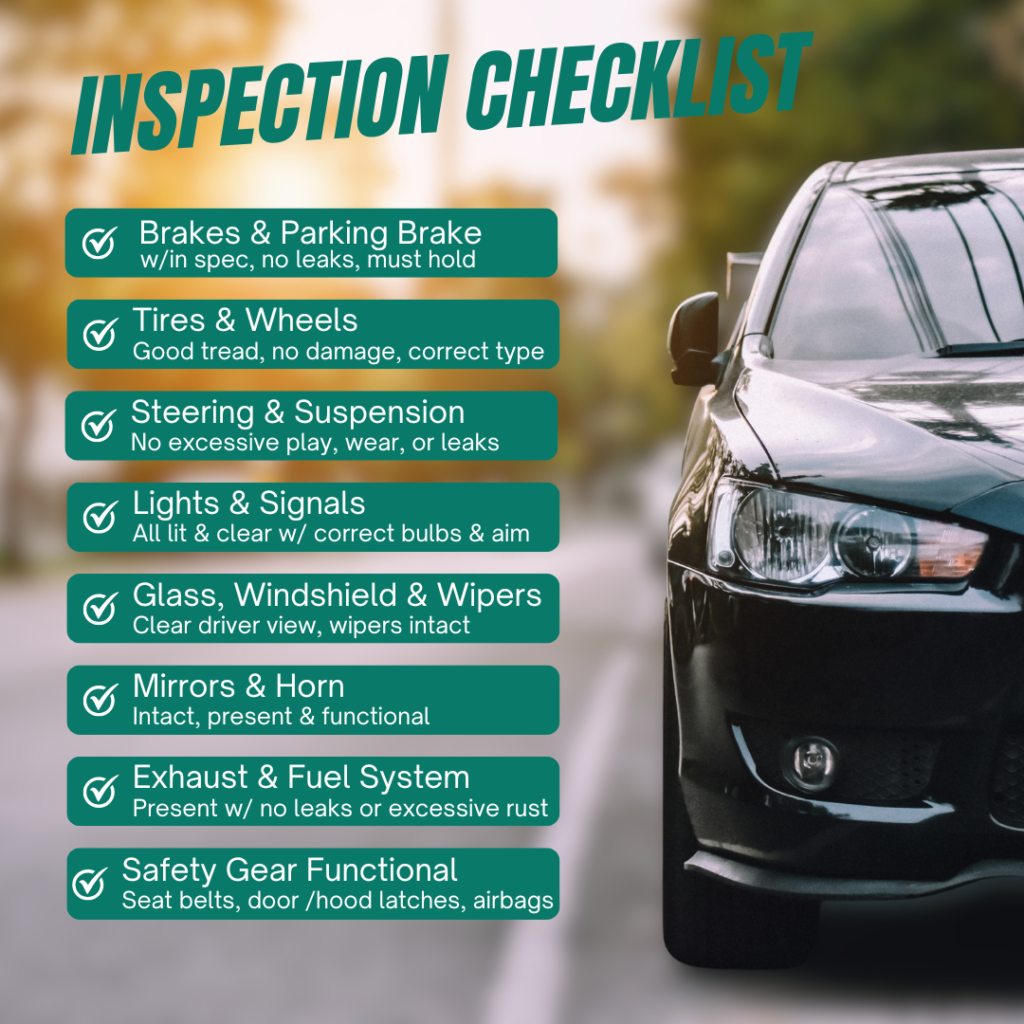
Some of the main items include:
- Brakes & parking brake — condition of pads/rotors or drums (minimum thickness is 2mm with no excessive pitting, grooving or glazing), fluid level, any leaks. Parking brake must hold.
- Tires & wheels — tread depth (minimum depth is 2mm), damage (no cord or secondary rubber showing or other damage like missing chunks from sidewall or cracks in wheels), correct tire type.
- Steering & suspension — checking for play (excessive movement) in joints, worn bushings, loose steering components, shocks/struts (no leaking), and proper alignment.
- Lights & signals — headlights, brake lights, turn signals, reverse lamps — all lights working, correct bulbs (turn signals must be amber), lenses clear, and correct aim.
- Glass, windshield & wipers — no major cracks or visibility issues*; wipers must be in good working order (torn wipers are a super common failure).
* There are multiple lines that address passable scratch/ crack sizes – check out section 19VAC30-70-210 in the Inspection Manual for details.
- Mirrors — must be present (must have interior and driver side), intact, and give proper rear visibility
- Horn — must be mounted properly and be loud enough to be heard at 200 feet
- Exhaust & fuel system — no leaks or major rust, and proper emissions-related components intact
- Safety gear — seat belts, door latches, hood latch, proper glass, airbags (if equipped), etc.
📅 How Often You Need an Inspection — and What It Means for You
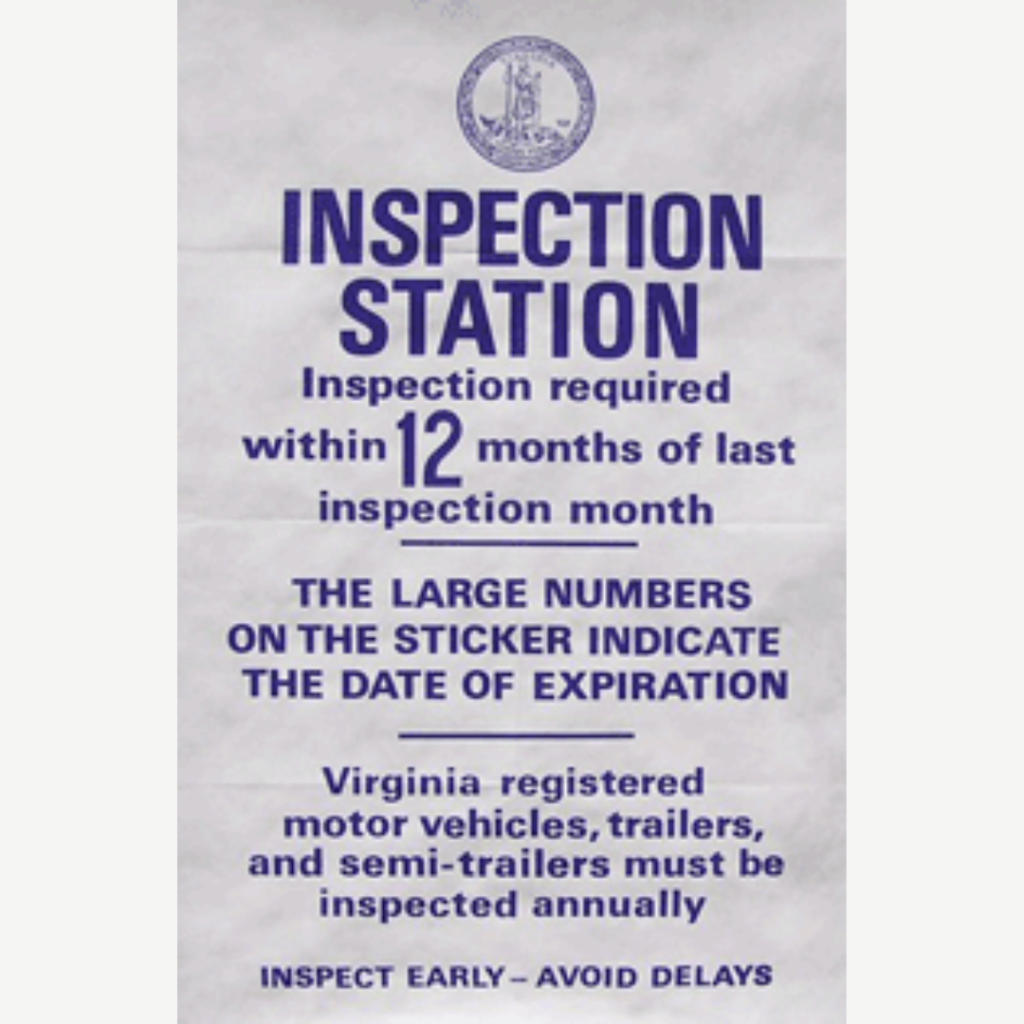
- In Virginia, your car’s safety checkup is required once every 12 months. Think of it like an annual physical… but for your vehicle, and with fewer awkward conversations.
- If you live in certain parts of the state, you’ll also need an emissions inspection every two years. It’s basically your car proving it can behave itself environmentally.
- And here’s a fun twist: the DMV doesn’t send reminders. Nope. Not a postcard. Not an email. Not even a friendly owl. It’s all on you (but hey, we’re happy to help you keep track!).
One more important note — your inspection has to be done at a certified inspection station. Not every auto shop is officially allowed to slap that shiny sticker on your windshield, so make sure you’re visiting the real deal.
Luckily… that’s us!
⏱️ How Long Does It Take?
Typically around 45 minutes — just enough time to grab a coffee, answer a couple emails, or contemplate why all pens disappear from your cup holder.
🚦 What If My Car Fails?
No worries! Wear and tear happens.
If any of the above systems are unsafe or visibly defective, the car fails the inspection.
We’ll walk you through what needs fixing, give you honest recommendations, complete the repairs and help you get back on the road safely.
If you choose to complete the repairs yourself or elsewhere (totally an option!), your car is issued a rejection sticker.
You have a 15-day grace period to handle any repairs and return for a re-inspection of the failed items.
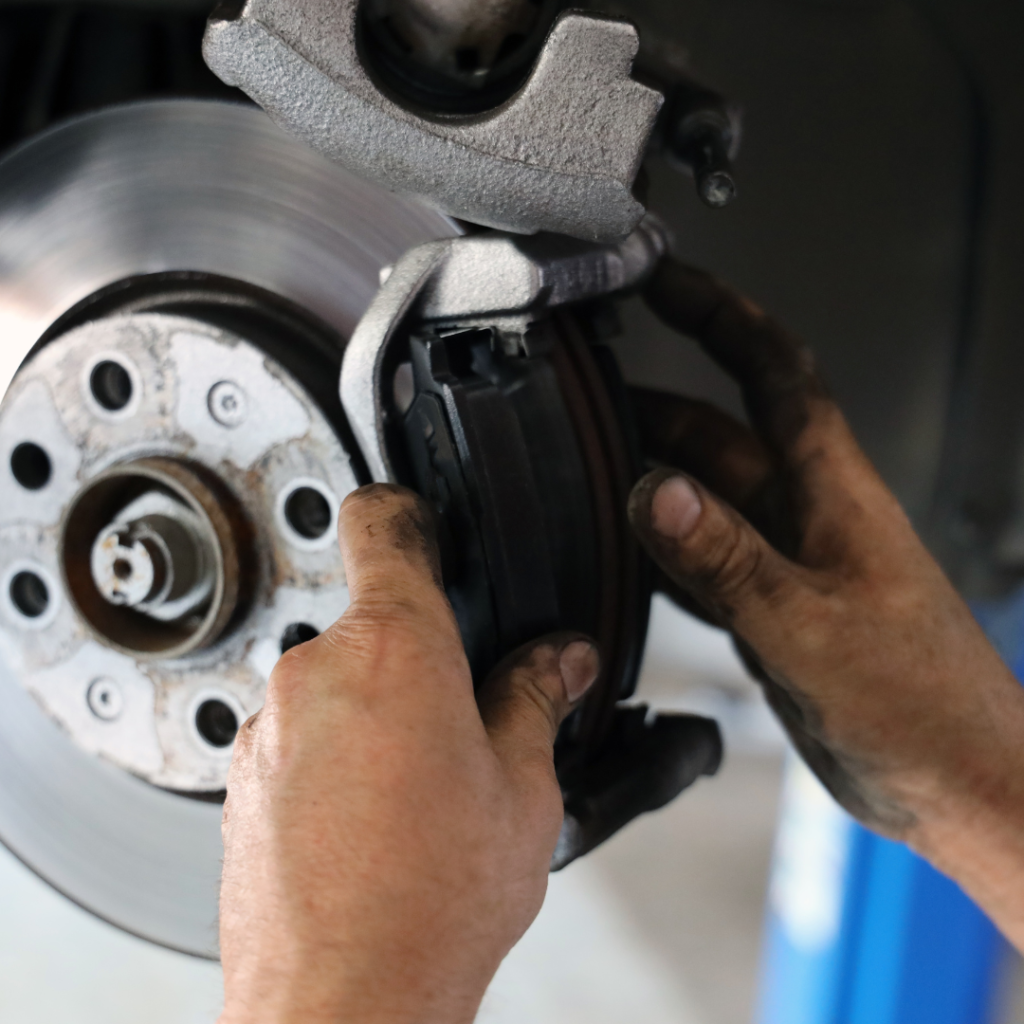
After repairs, bring your car back for a re-inspection so it’s inspection-compliant and road-ready — no sketchy equipment, no stress (Code of Virginia § 46.2-1003 & § 46.2-1158).
✅ Smooth Inspection Checklist
- Check your windshield for the current inspection sticker to see the expiration ate
- Go over your vehicle using the What’s checked section above or the Vehicle Safety Inspection
- Don’t wait until the last minute. Book your inspection a few weeks early (especially if your car might need repairs).
- Bring your registration and payment — $20 for passenger cars ($12 for motorcycles).
- If your car fails, get the necessary repairs. We can take care of you in one trip, or arrange the repairs and return for a follow-up inspection. You’ll need to fix only the failed items if you return within the rejection sticker window.
- Keep your receipts and certificate handy — especially if you’re moving or buying/selling a car.
🛞 Looking Out for You and Your Ride
At Sandston Automotive, we believe state inspections are more than just stickers — they represent a basic safety check that helps keep you, your family, and your community safer on Virginia roads. Think of it like an annual “tune-up” for your car’s safety systems.
If you’re due for an inspection (or have questions about what’s required), bring your car by — we’re certified and ready to help you pass with flying colors.
Sandston Automotive
SMALL TOWN FEEL, BIG TIME SERVICE
804-737-7206