Tag: Richmond VA auto repair

  • Your Vehicle’s Fluids: What They Do and When to Change Them

    Let’s be honest—most people don’t pop the hood just to admire their vehicle’s fluids. But those fluids are doing a lot of heavy lifting behind the scenes. Think of them as your car’s lifeblood. Ignore them for too long, and things can get expensive… fast.

    Here’s a simple, no-nonsense breakdown of the most important vehicle fluids, what they do, and when you should be thinking about servicing them.


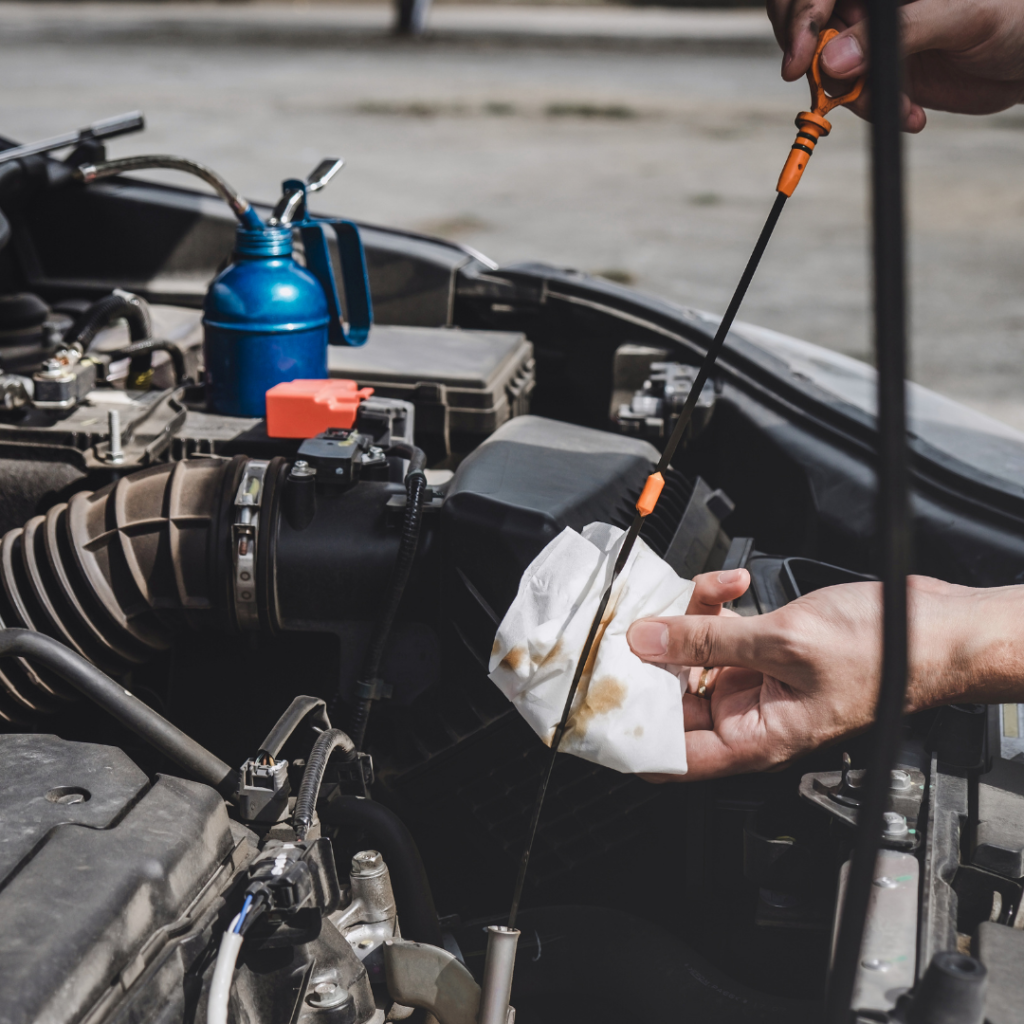
    Engine Oil

    What it does:
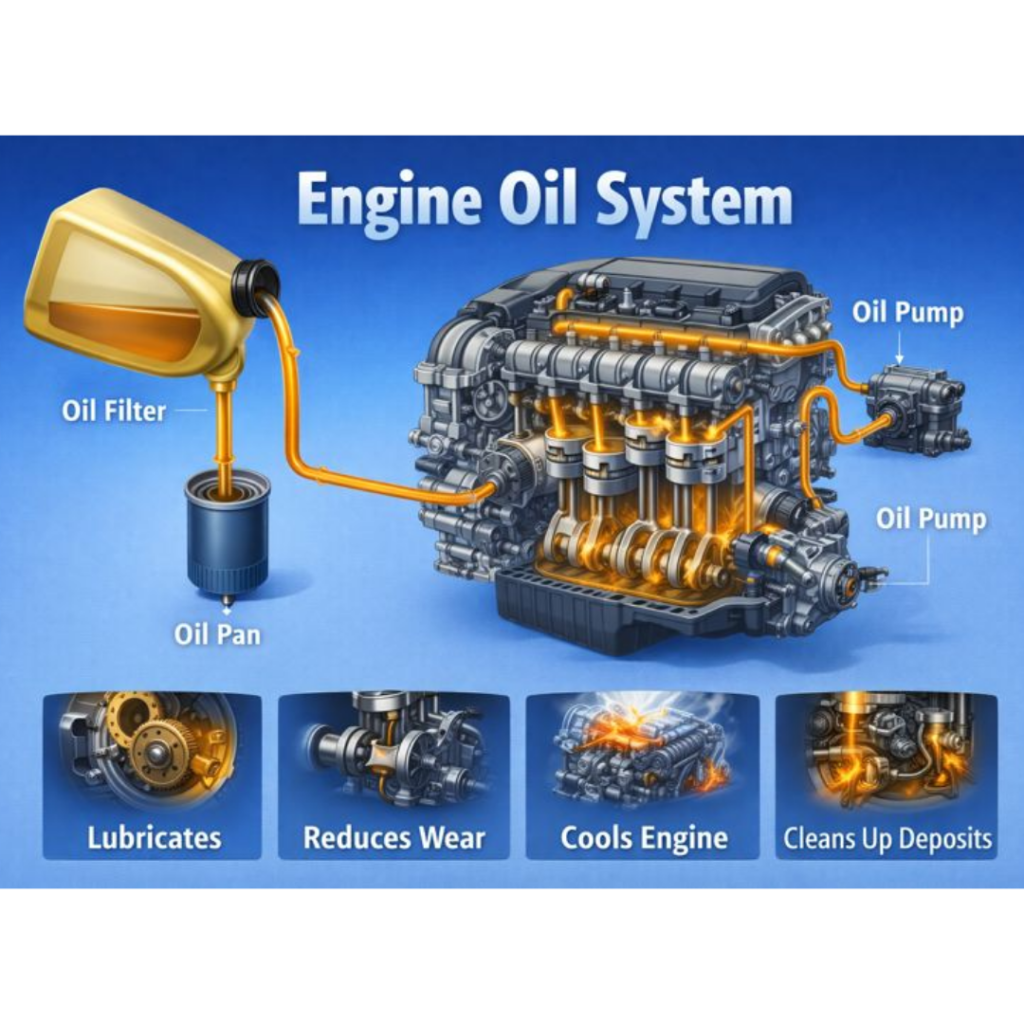
    Engine oil lubricates moving parts, reduces friction, helps control temperature, and keeps internal components clean.

    When to change it:
    Most manufacturers set their own oil change intervals, which can range anywhere from 3,000–7,500 miles (or more) depending on the engine design, oil type, and vehicle use.

    We set reminders at

    • 3,500 miles for conventional and blends &
    • 5,000 miles for full synthetic.

    If you’re doing a lot of short trips, towing, or stop-and-go driving, you may need it more often.

    We have found that some engines are more tolerant to longer gaps between oil changes while others are more sensitive to contaminants and perform best (while avoiding issues) with more frequent oil changes.

    What happens if you wait too long?
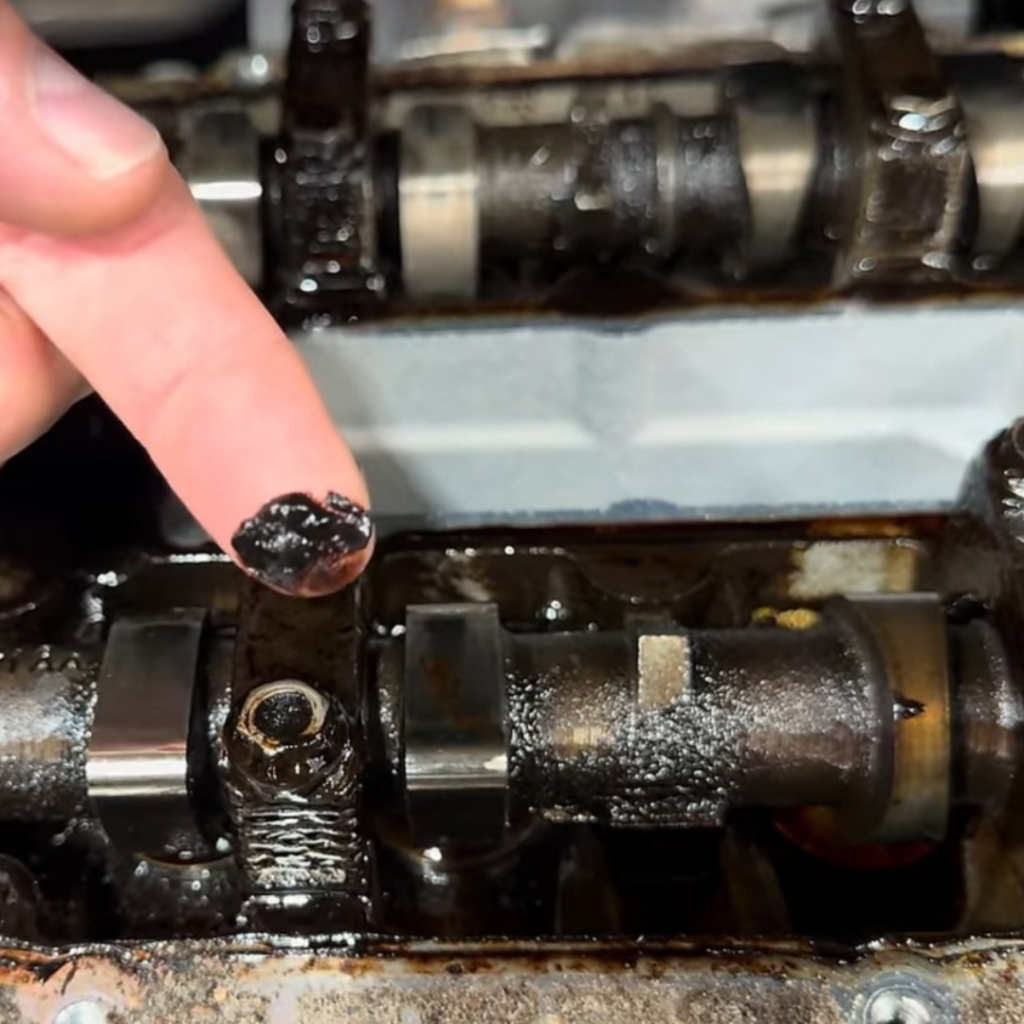
    Sludge buildup, poor lubrication, overheating, and in worst cases—engine failure. This one’s non-negotiable.

    Check out this shelf of shame post about way overdue oil changes


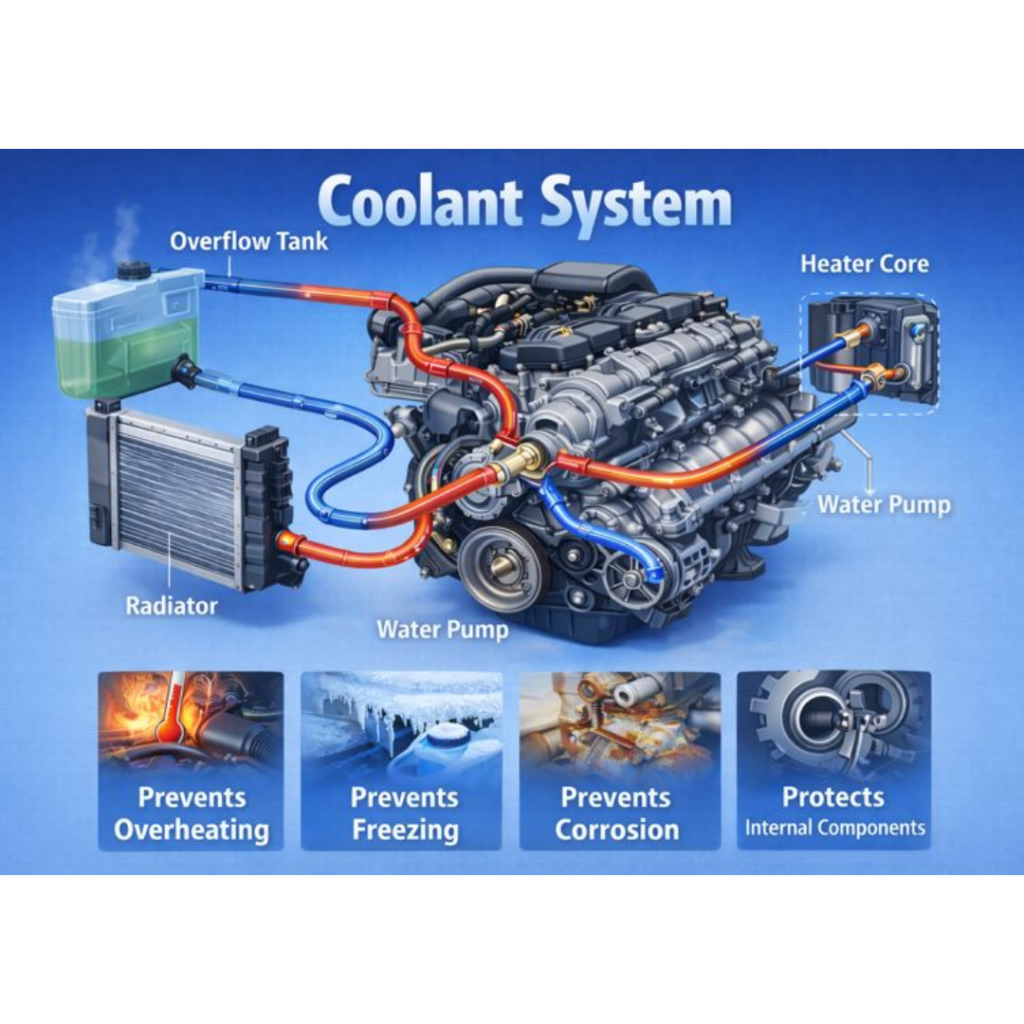
    Coolant (Antifreeze)

    What it does:
    Coolant regulates engine temperature, preventing overheating in summer and freezing in winter.

    When to change it:
    Typically every 30,000–60,000 miles, depending on the vehicle and coolant type.

    Signs it needs attention:
    Overheating, sweet smell, low coolant warning, or visible leaks.


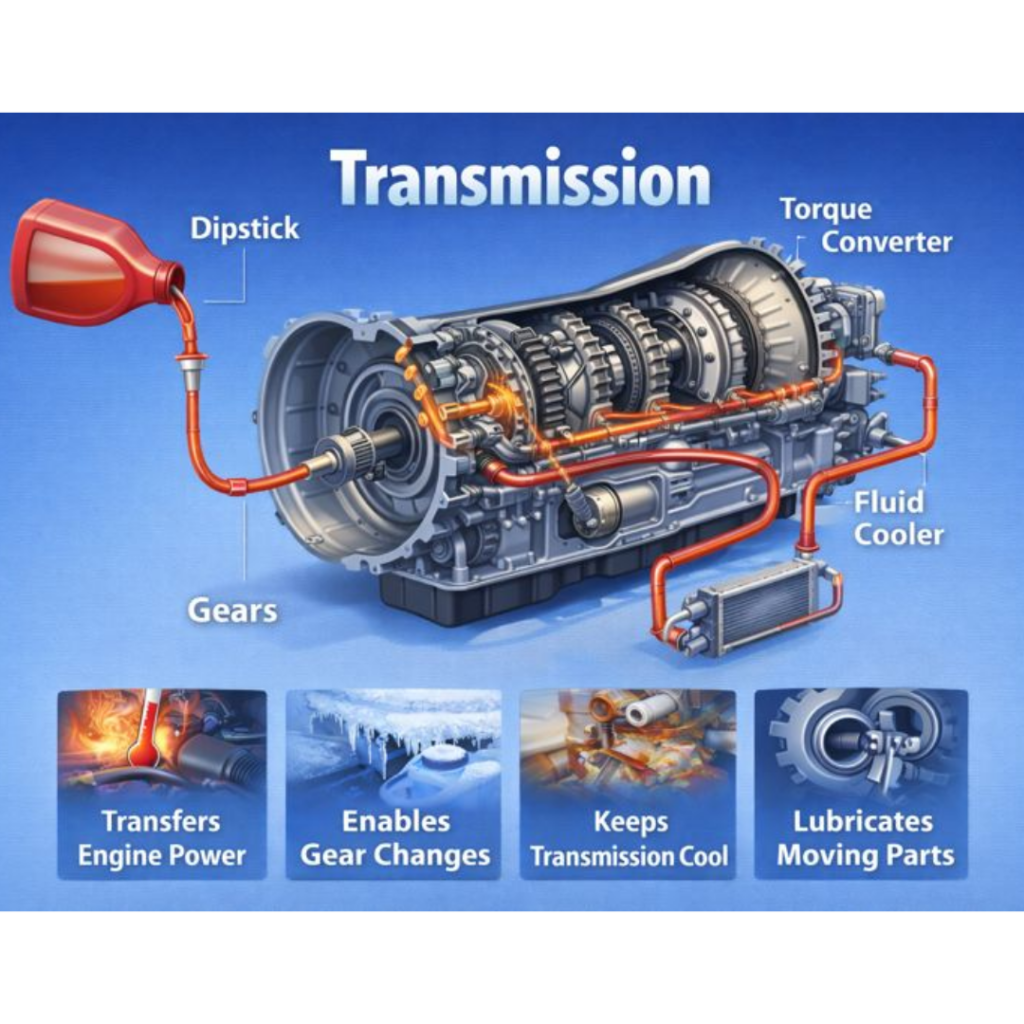
    Transmission Fluid

    What it does:
    Keeps your transmission shifting smoothly, lubricates internal components, and manages heat.

    When to change it:
    Anywhere from 30,000–100,000 miles depending on the vehicle, transmission type, and driving conditions.

    Why it matters:
    Old or contaminated transmission fluid can lead to slipping, hard shifts, and very costly repairs.


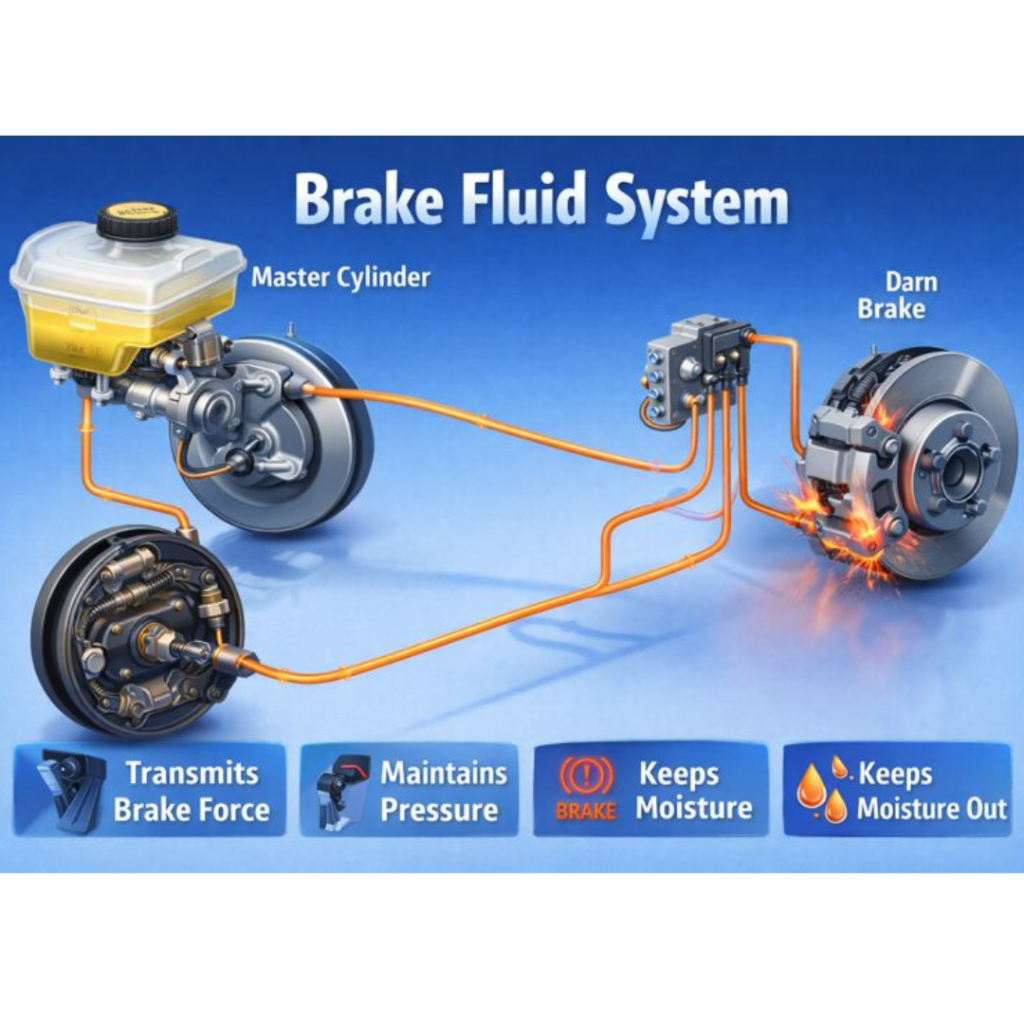
    Brake Fluid

    What it does:
    Transfers force from your brake pedal to the brakes themselves. Without it, stopping wouldn’t happen.

    When to change it:
    Usually every 2–3 years.

    Fun (but scary) fact:
    Brake fluid absorbs moisture over time, which reduces braking performance and can damage brake components.


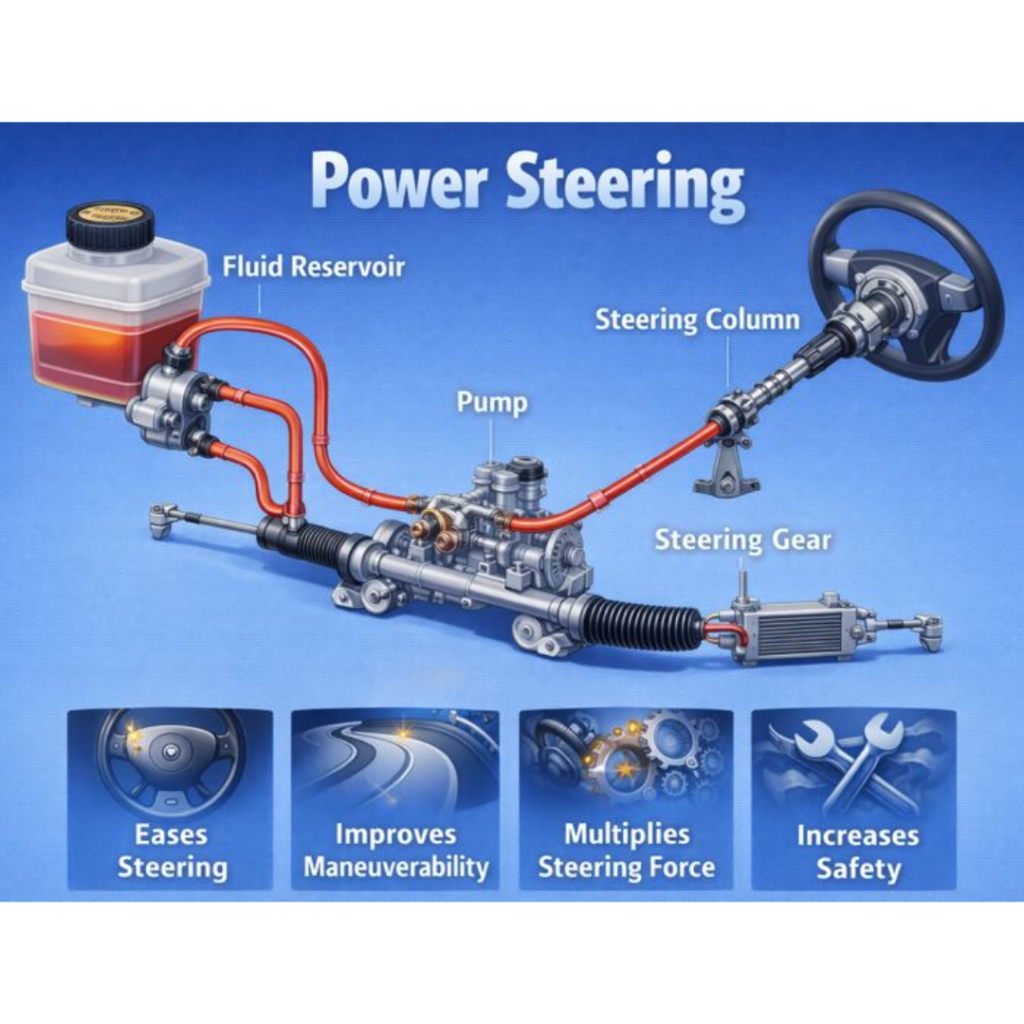
    Power Steering Fluid

    What it does:
    Helps you turn the steering wheel smoothly and easily.

    When to change it:
    Often overlooked, but typically every 50,000–75,000 miles, or if it looks dark or contaminated.

    Red flags:
    Whining noises, stiff steering, or visible leaks.


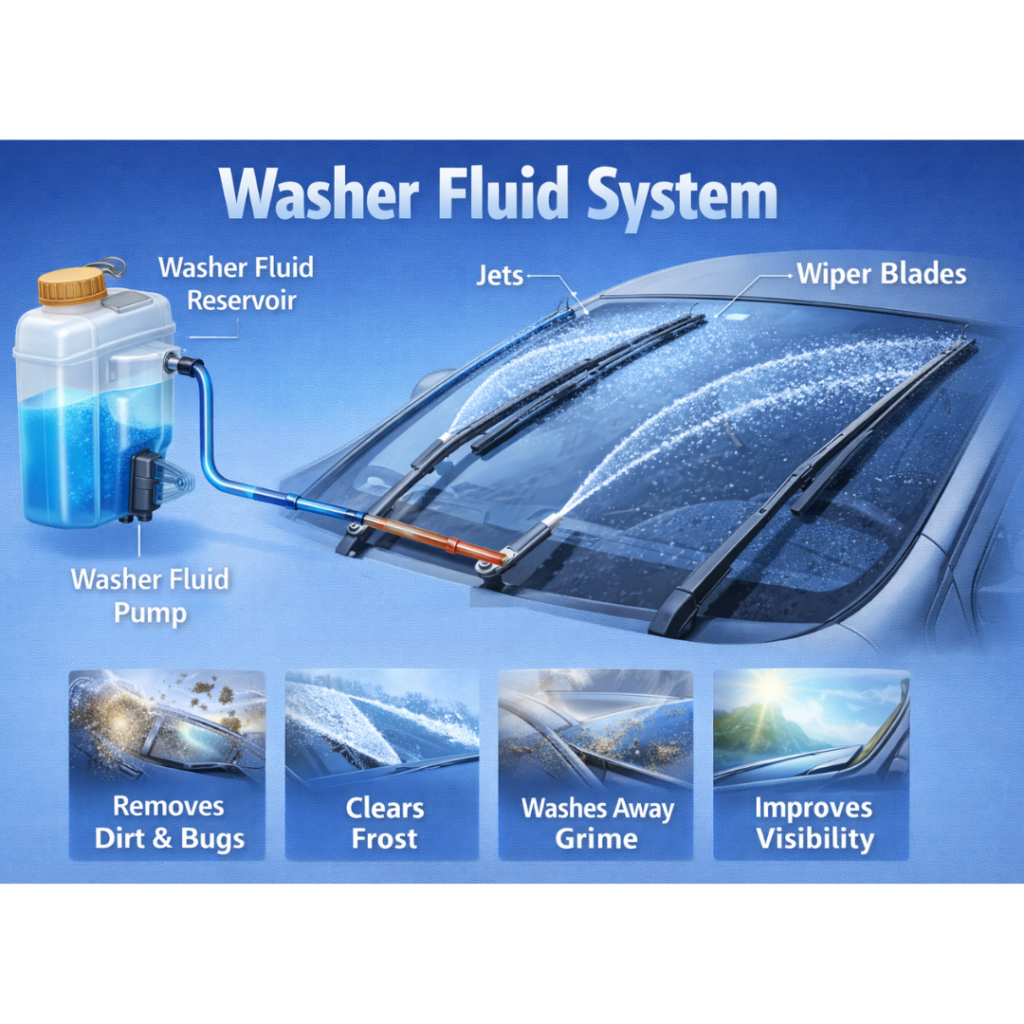
    Windshield Washer Fluid

    What it does:
    Keeps your windshield clean so you can see where you’re going (kind of important).

    When to change it:
    Top it off as needed—especially before road trips or winter weather.

    Good to know: There are many formulas on the market. To simplify you can absolutely run the blue all year long, or you can opt to switch with the seasons.


    How to Stay Ahead of Fluid Problems

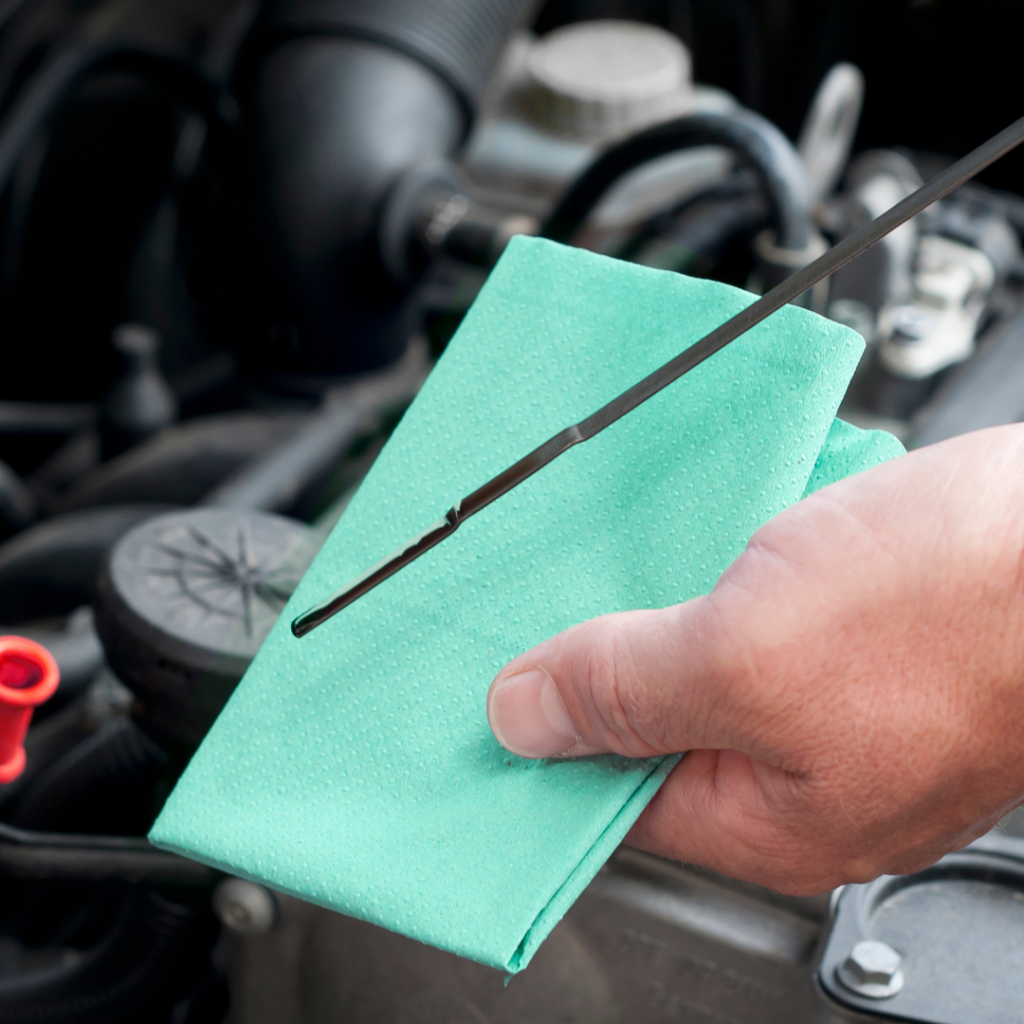
    ✅ Check fluid levels regularly (or have us do it during routine service)

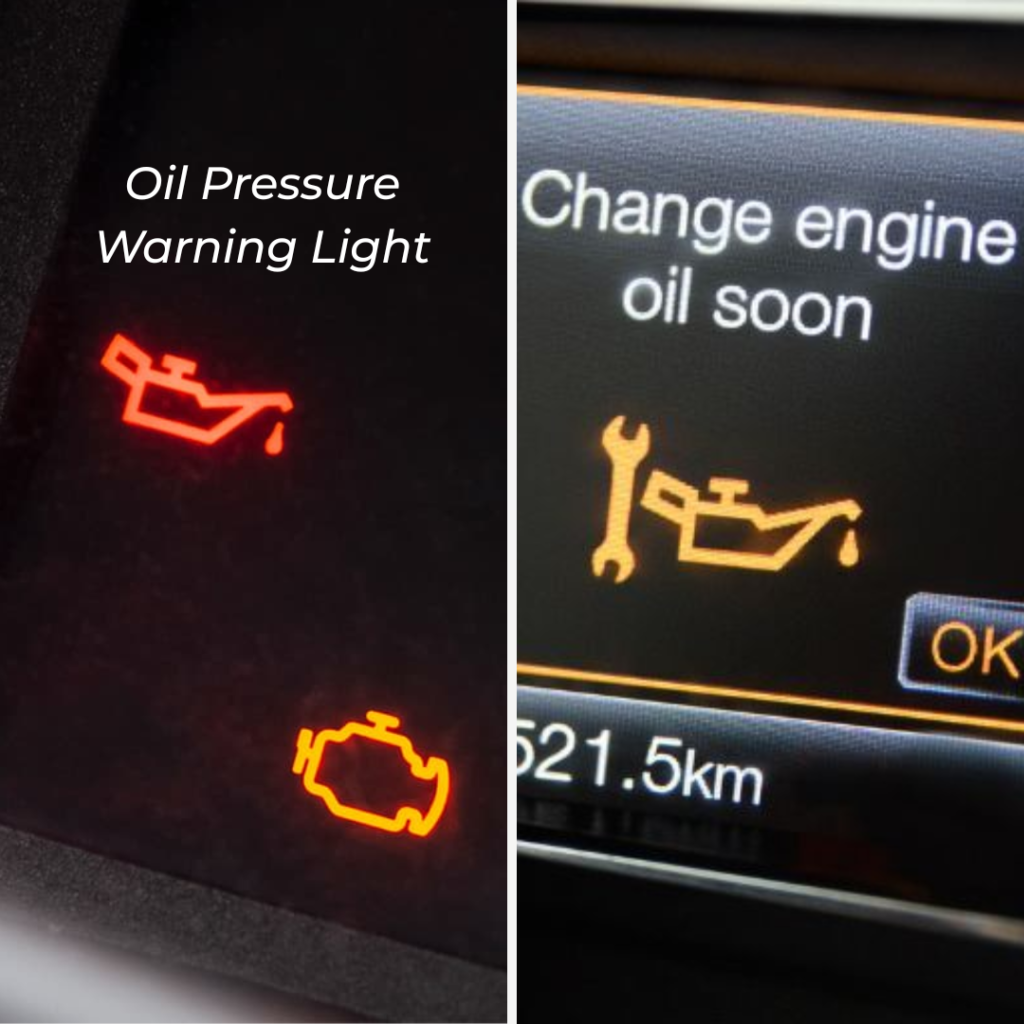
    ✅ Pay attention to dashboard warning lights

    ✅ Watch for leaks or puddles under your vehicle

    ✅ Follow your manufacturer’s maintenance schedule

    😉 Wearing gloves keeps your hands clean and protected from irritation


    Hydration is key (Even for cars)

    Fluids might not be flashy, but they’re critical to keeping your vehicle reliable, safe, and long-lasting. A little preventative maintenance goes a long way—and it’s always cheaper than major repairs.

    If you’re not sure when your fluids were last serviced, or you want us to take a look, stop by or give us a call. We’re always happy to help keep your vehicle running its best 🚘


    Sandston Automotive

    SMALL TOWN FEEL, BIG TIME SERVICE

    804-737-7206

  • Broken, Busted and Burnt Up: Tales From the Shelf of Shame

    Episode: The Caliper That Couldn’t (and the Pads That Paid the Price)

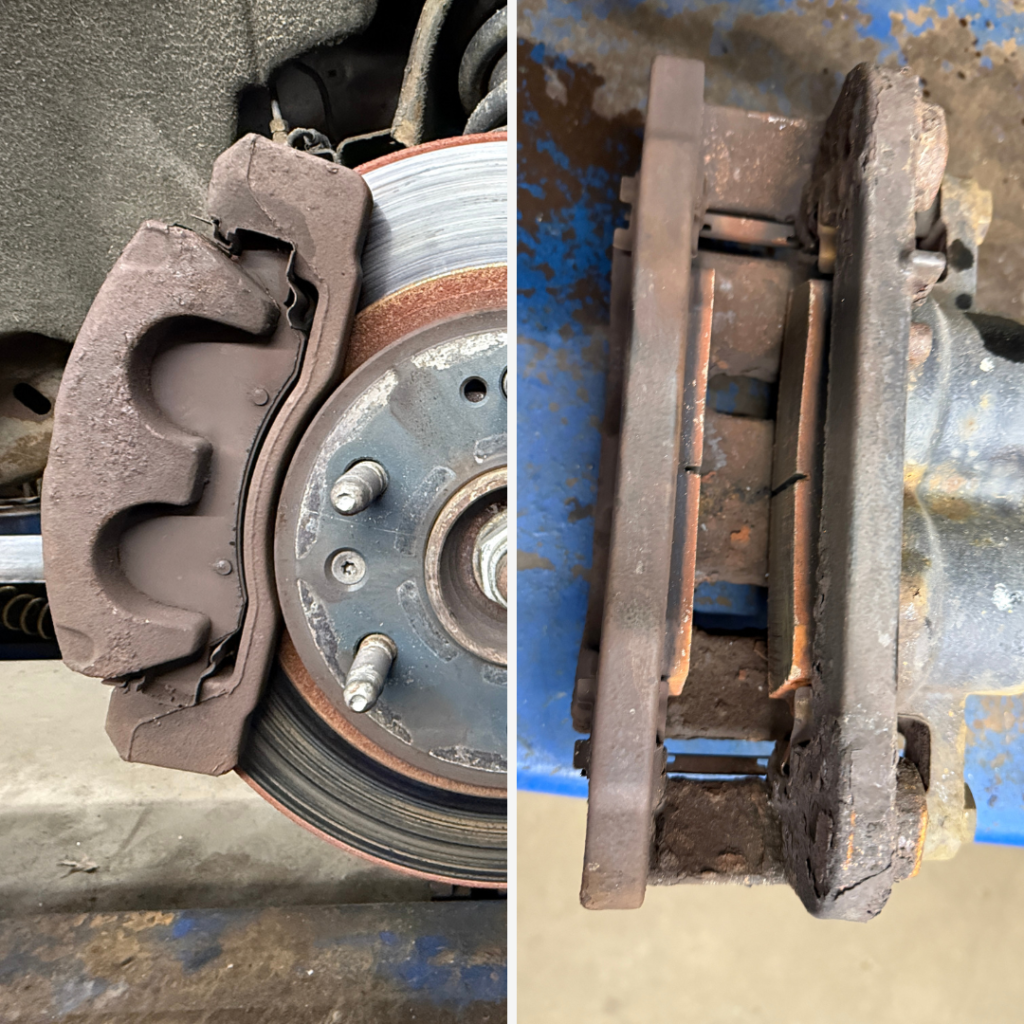
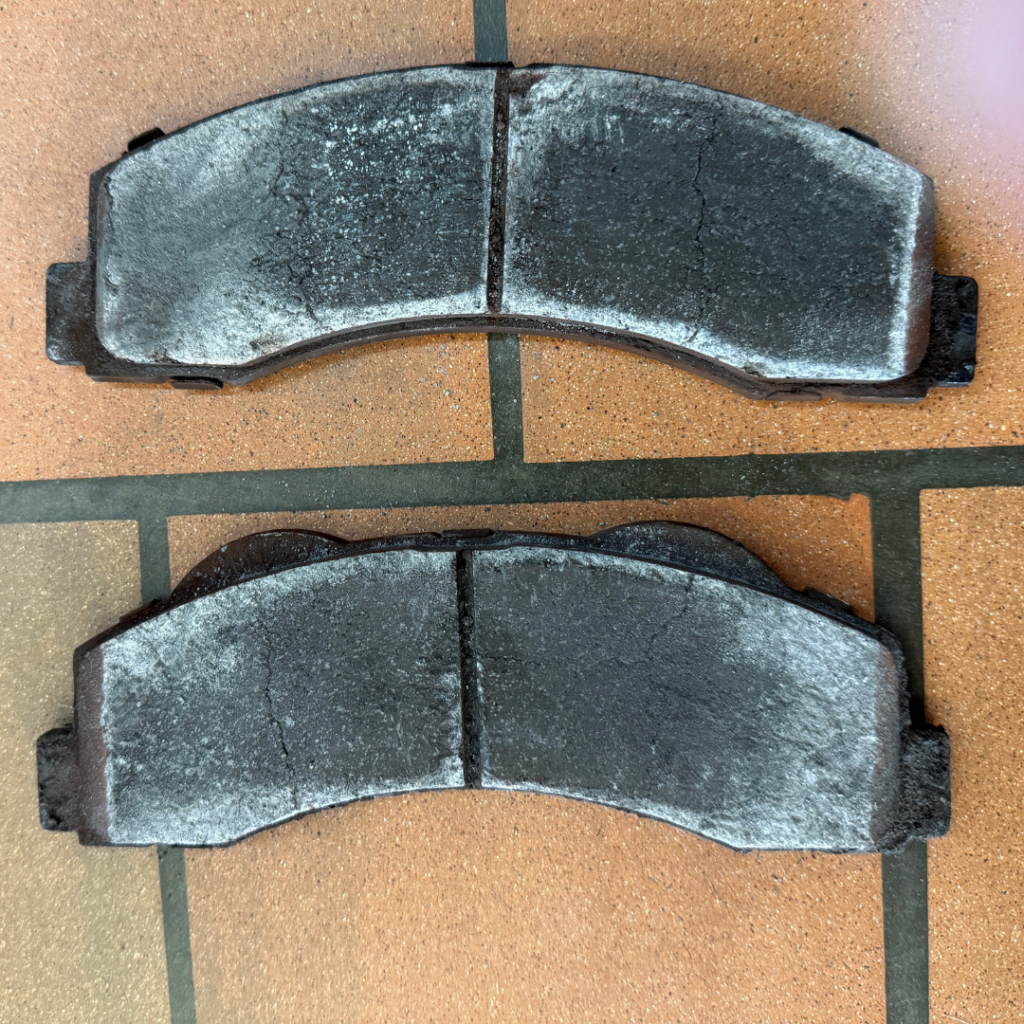
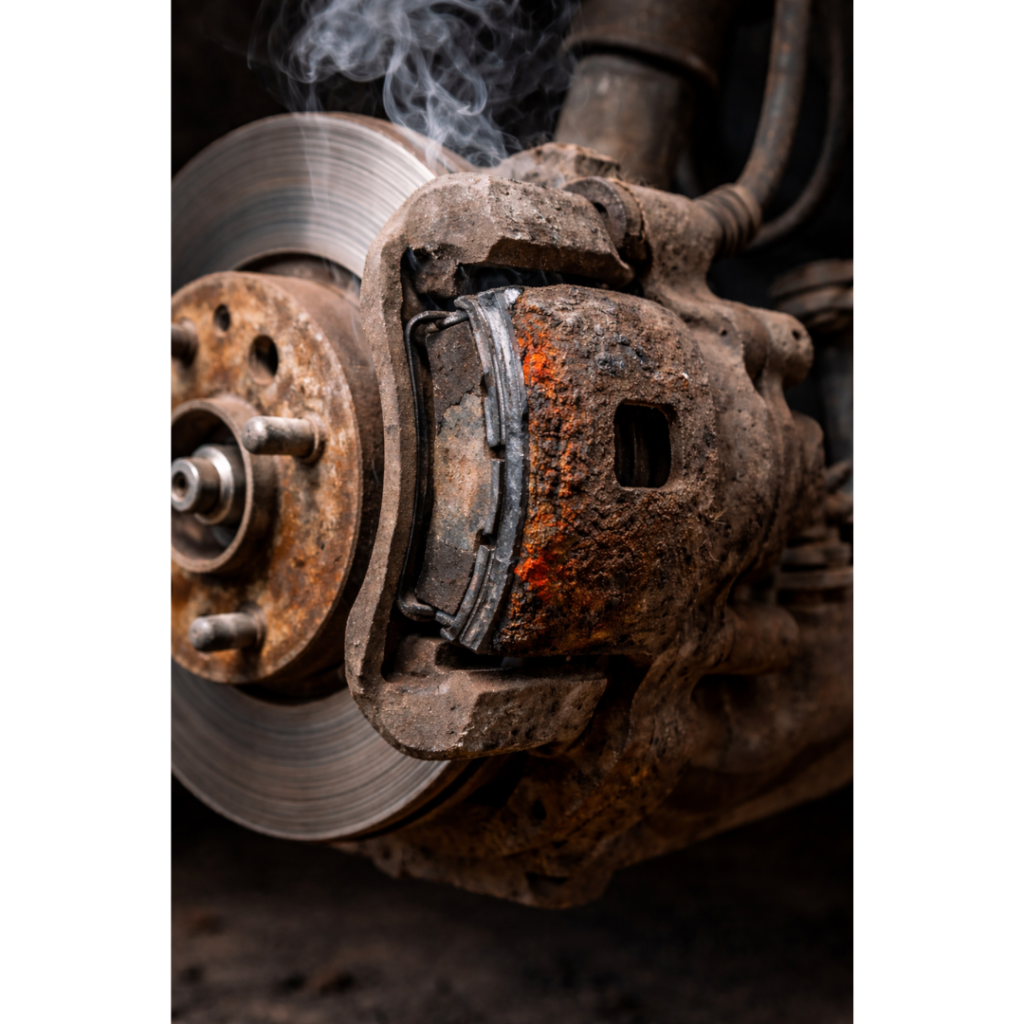
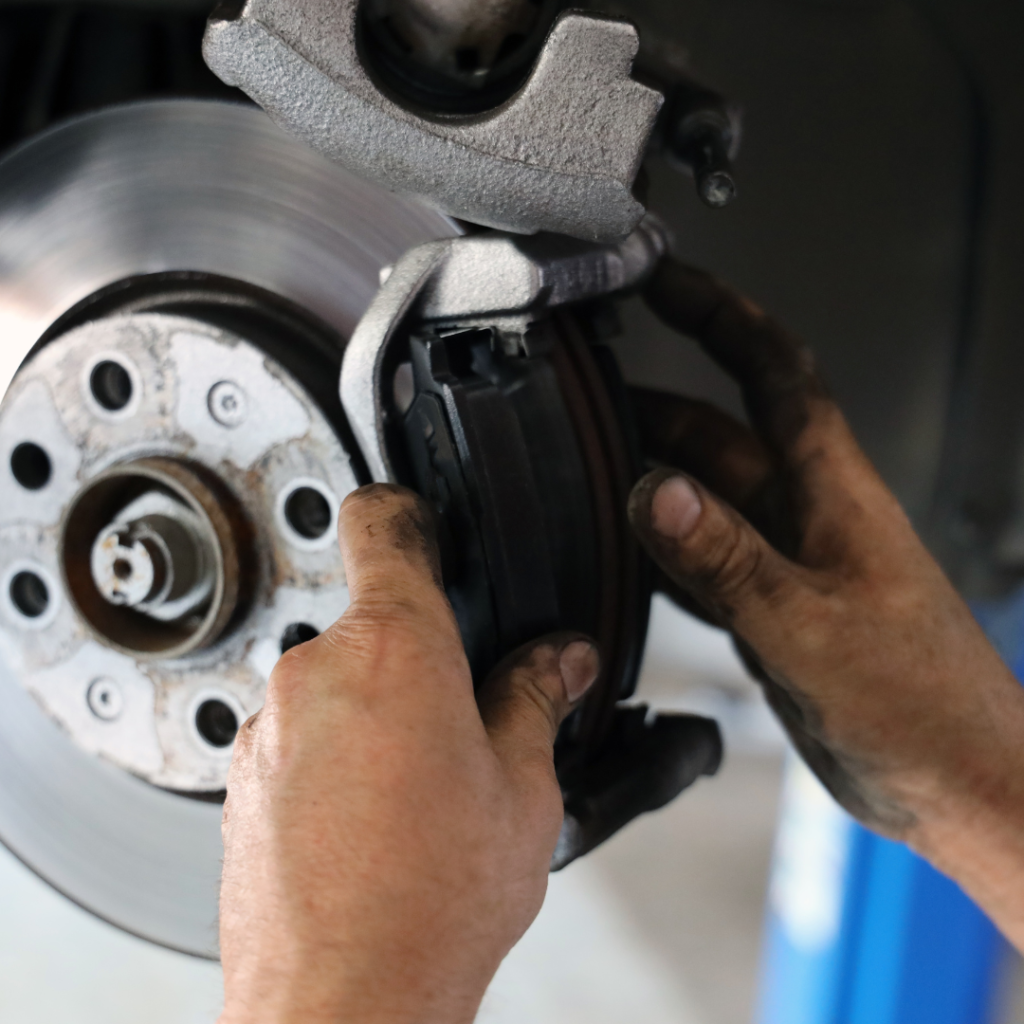
    Welcome to the Shelf of Shame, where broken parts go to retire, and the rest of us go to learn from others’ Ooops! (and occasionally laugh so we don’t cry). Today’s featured artifact? A pair of brake pads with uneven wear and enough heat damage to qualify as small, metallic pancakes fresh off a skillet.

    So, What Happened – and more importantly, How do you prevent it?


    🧱 Meet the Brake Pads

    These pads look like they’ve been through a fiery nightmare and came back with the scars to prove it. One end is worn down to paper-thin nothingness, complete with a nice bit of charring for dramatic effect.

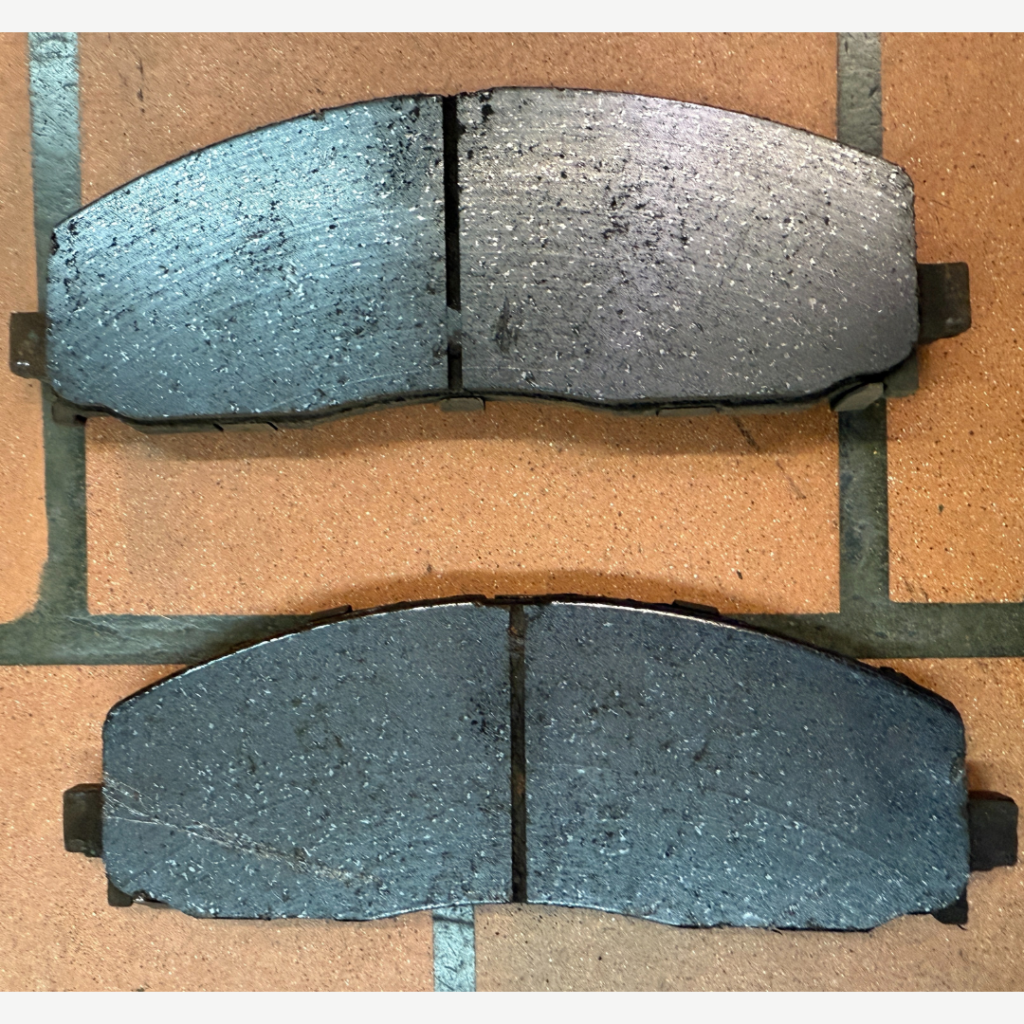
    Now compare that to this second used set—calm, even wear, simply at the end of its life like a normal, well-adjusted brake pad.

    This dramatic difference tells us one thing for sure:
    👉 A caliper decided it was done with its responsibilities and locked up.


    🔥 So… Why the Heat Damage?

    When a caliper locks up, the affected pad is constantly pressed against the rotor. That means extreme friction. And friction means heat (and not the good kind). This heat means… well… these crispy, overheated brake pads that look like they were roasted over an open flame.

    The result?

    • Rough, jerky driving
    • Blue and purple discoloration
    • Cracking and glazing
    • A smell no human should ever have to endure
    • A rotor that probably didn’t survive either

    If brake parts could scream, these pads would be sending us complaint emails.


    🤦 What Causes a Caliper to Lock Up?

    Many things can send a caliper into early retirement, but the top culprits include:

    • Corrosion from moisture (a classic)
    • Seized slide pins that forgot how to slide
    • Old or contaminated brake fluid
    • A piston that decided “movement” was optional

    One small part failing leads to a beautiful cascade of mechanical misery.


    🚗 Could This Have Been Prevented?

    Oh yes. Absolutely. 100%.

    Regular brake inspections would have caught:

    • Uneven wear early
    • Sticking pins
    • Caliper hesitation
    • That burning smell that says, “Hey, something’s wrong!”

    We love diagnosing problems, swooping in and being your cars hero, but trust us—your wallet will love you more if we catch these issues before the pads turn into charcoal briquettes.


    🛞 What Your Brakes Want You To Know

    This set of brake pads now sits proudly on the Shelf of Shame—not to embarrass anyone, but to teach drivers what small warning signs can become if ignored.

    Don’t ignore the signs!

    • If your car pulls to one side when braking—get it checked.
    • If you smell burning—get it checked.
    • If your brakes squeal, grind, or make noises that sound like a demon trying to escape—definitely get it checked.

    And most importantly…
    Brake pads should not look like they were used for a campfire project.


    Want to see the next artifact from the Shelf of Shame? Spoiler: it involves oil changes so overdue, the engine started sending out smoke signals.

    Sandston Automotive

    SMALL TOWN FEEL, BIG TIME SERVICE

    804-737-7206
  • How We Fix a Flat Tire (AKA: Performing Minor Surgery on Your Tire—With the Right Tools)

    Flat tires never happen when you’re relaxing at home. Nope. They wait until you’re running late, it’s raining sideways, and your coffee just spilled. Perfect timing.

    But don’t worry—once your tire limps its way to our shop, we’ve got you covered!

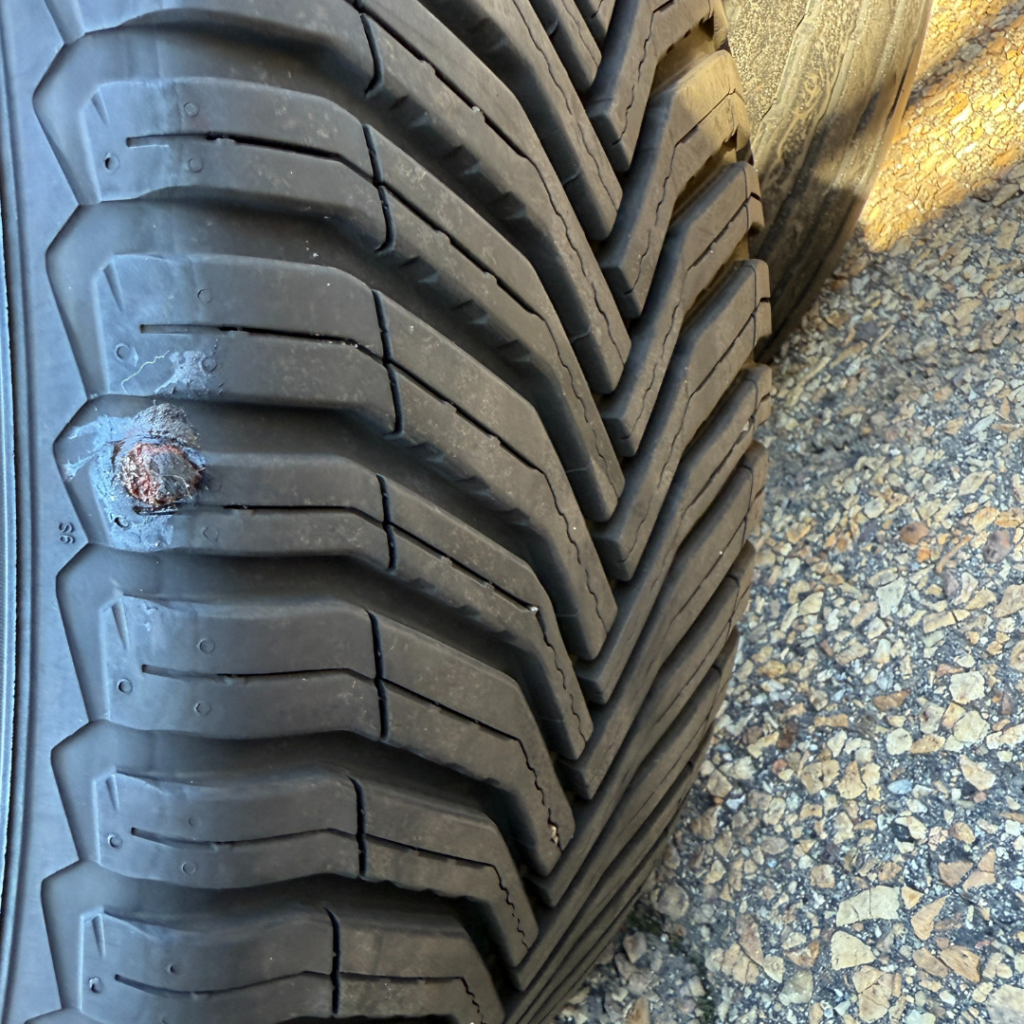
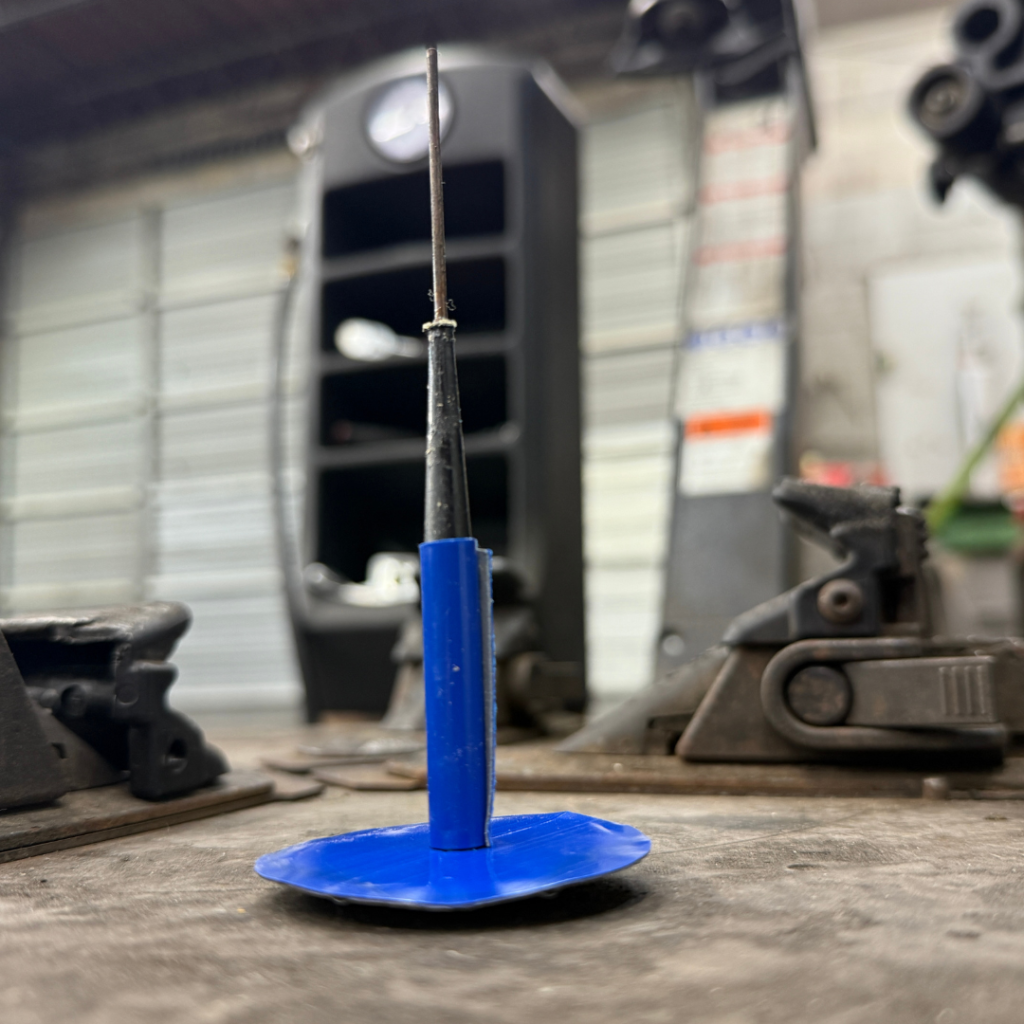
    Around here, we don’t believe in guesswork or “good enough” fixes. Every flat tire gets an internal inspection, and depending on what we find, we repair it using industry-approved internal methods—sometimes a patch-only repair, other times a combination patch-plug. Different injuries require different treatments. Think tire surgery, not duct tape.

    Let’s walk through how we bring your tire back from the dead.


    Wait—Why Not Just Pop a Plug in It?

    Because we like your wheels, your life, and our reputation.

    A quick “drive-by plug” might seem convenient, but it’s kind of like putting a Band-Aid on a cracked pipe. Sure, it covers the hole and might hold for a bit… until it doesn’t. And when it fails, it usually fails spectacularly—at highway speed.

    If we don’t open the tire up, we can’t see:

    • Whether the inside looks like a crime scene
    • If the tire was driven flat and is now emotionally (and structurally) damaged
    • If the puncture is even in a repairable zone
    • Hidden sidewall injuries that would make the tire unsafe

    So yeah—plug-only repairs? Hard pass.


    Step 1: Find the Leak (Before We Take Anything Apart)

    Before the tire ever comes off the wheel, we water-test it to pinpoint exactly where the air is escaping. This tells us what kind of damage we’re dealing with and helps determine whether the tire is even a candidate for repair.

    Once we know what we’re dealing with, we move on to the next step.


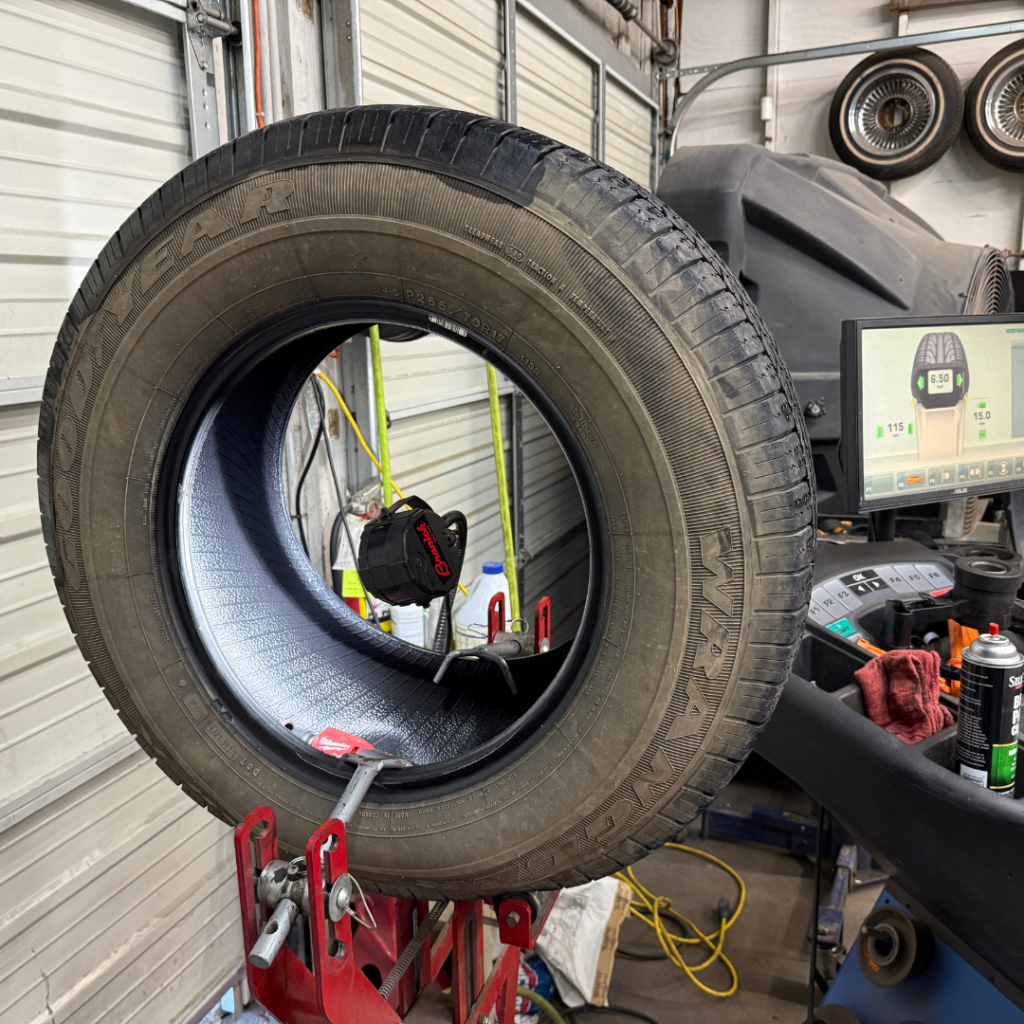
    Step 2: Take the Tire Off and Look Inside Its Soul

    We pull the wheel off, pop the tire off the rim, and inspect the inside like we’re CSI: Tire Edition.

    This is where we determine:

    • If the tire is safe to repair
    • Whether it needs a patch-only repair or a patch-plug
    • Or if it’s time to have “the talk” about replacement

    If we find something that makes the tire unsafe to fix, we’ll let you know—no surprises, no sketchy decisions.


    Step 3: Prep the Wound

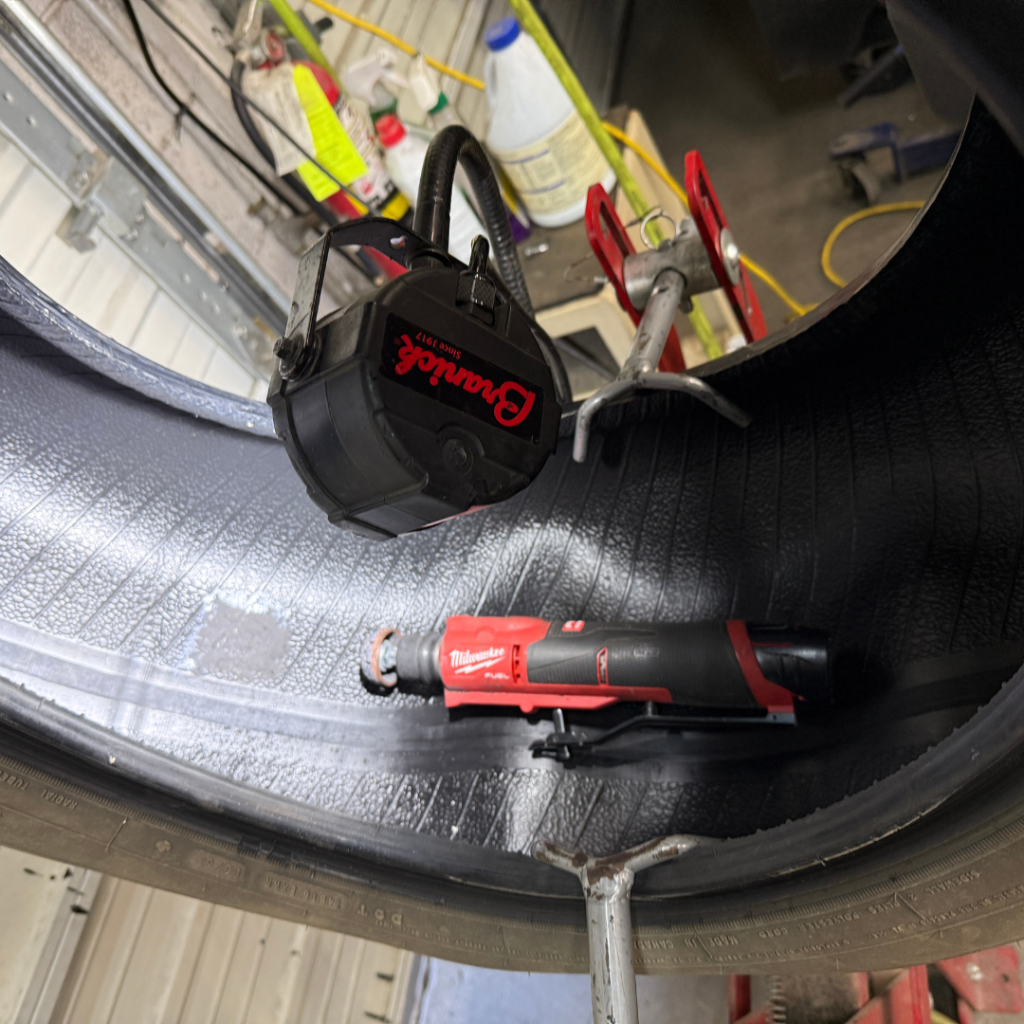
    Once we find the puncture, we:

    • Clean the injury
    • Mark the repair area
    • Buff the inner liner
    • Drill out the puncture channel with a specialized tool

    This removes debris, damaged rubber, and any poor life choices the tire has been carrying since it met that nail.


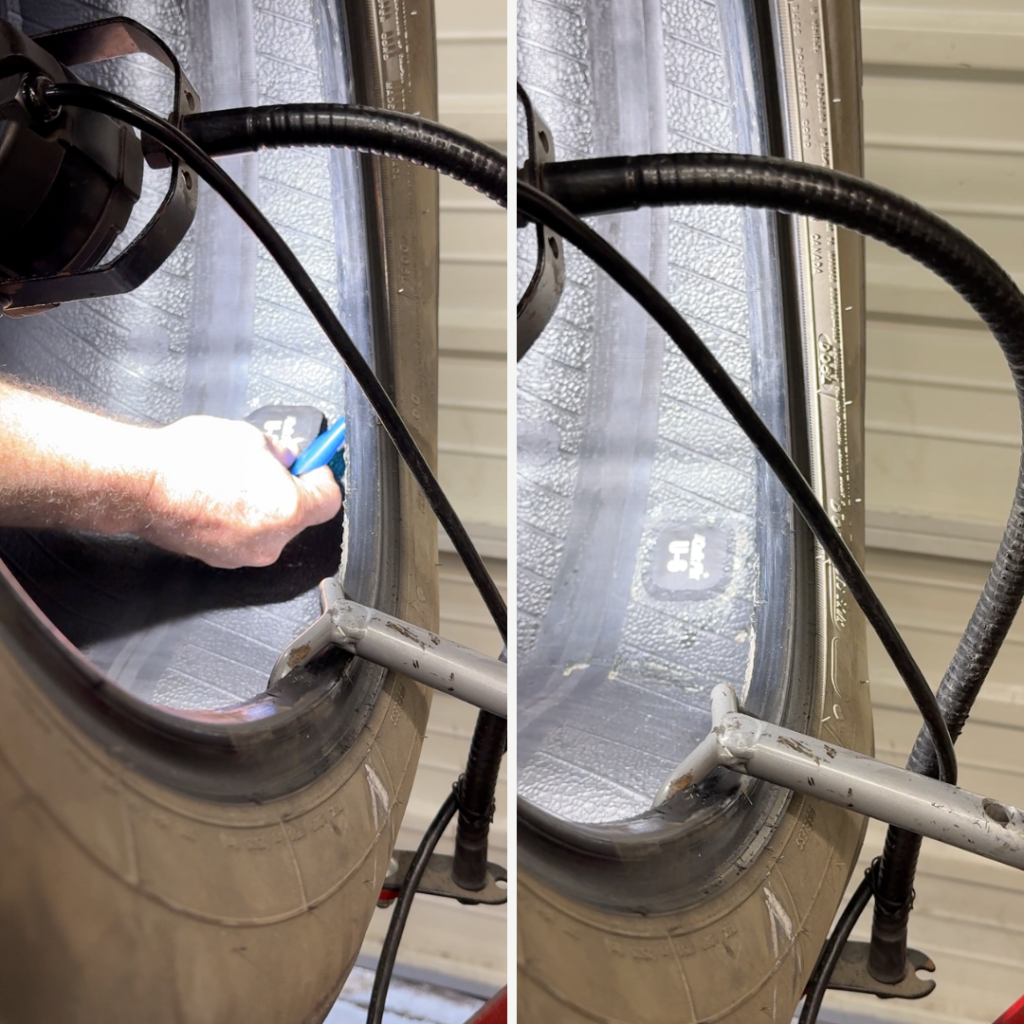
    Step 4: Install the Right Repair (Patch or Patch-Plug)

    This is where the magic happens.

    Depending on the location and type of puncture, we install:

    • A patch-only repair for certain small, straight-through tread punctures, or
    • A combination patch-plug, which seals the inner liner and fills the puncture channel

    -whichever keeps the tire safest long-term.

    When utilizing a patch repair, we:

    • Insert the plug from the inside out (patch plug)
    • Seat the patch against the inner liner
    • Apply vulcanizing cement (basically rubber superglue on steroids)
    • Roll it flat until it’s bonded tighter than your phone to your hand

    Both methods seal the tire internally so the tire is airtight and structurally sound.


    Step 5: Button It Up and Double-Check Everything

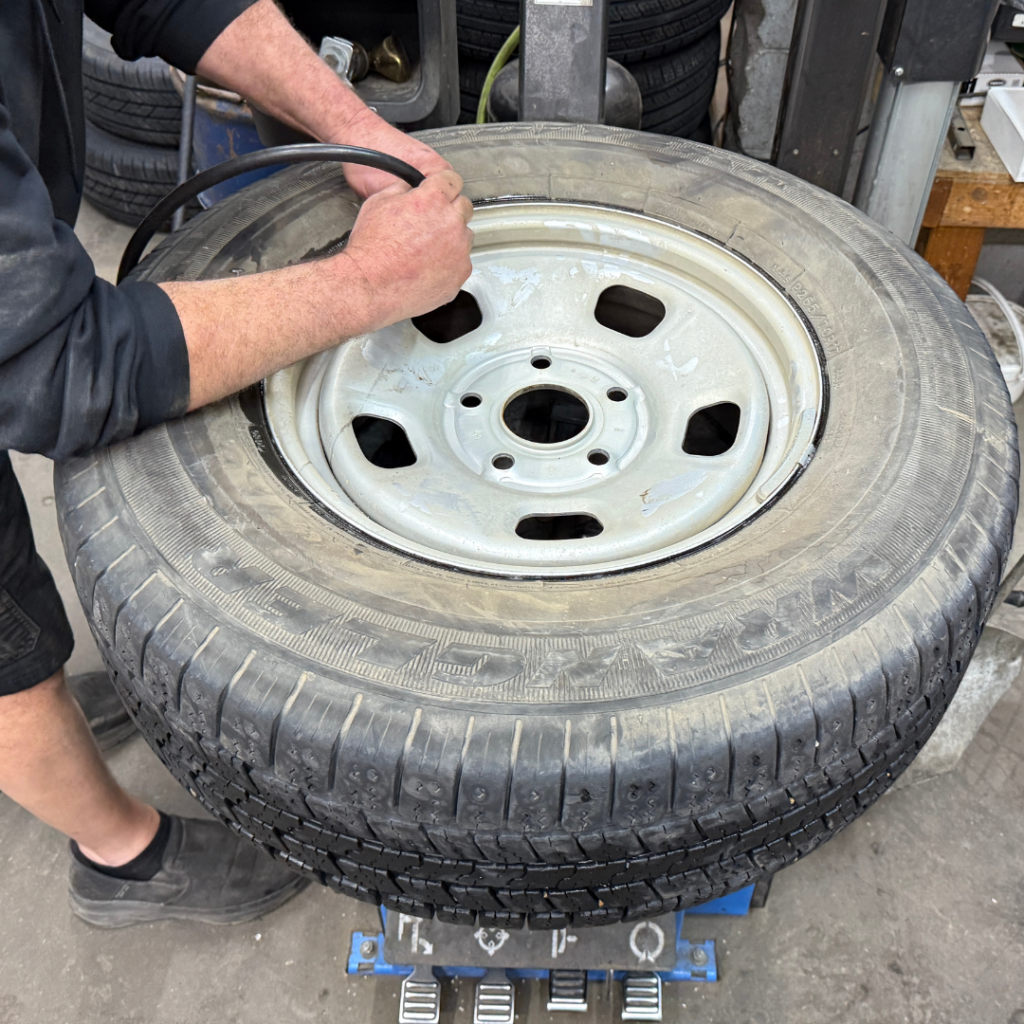
    We trim the plug (if used) flush on the outside, remount the tire, inflate it, and make sure:

    • The repair is holding
    • The bead is seated properly
    • The tire isn’t hissing like an angry cat

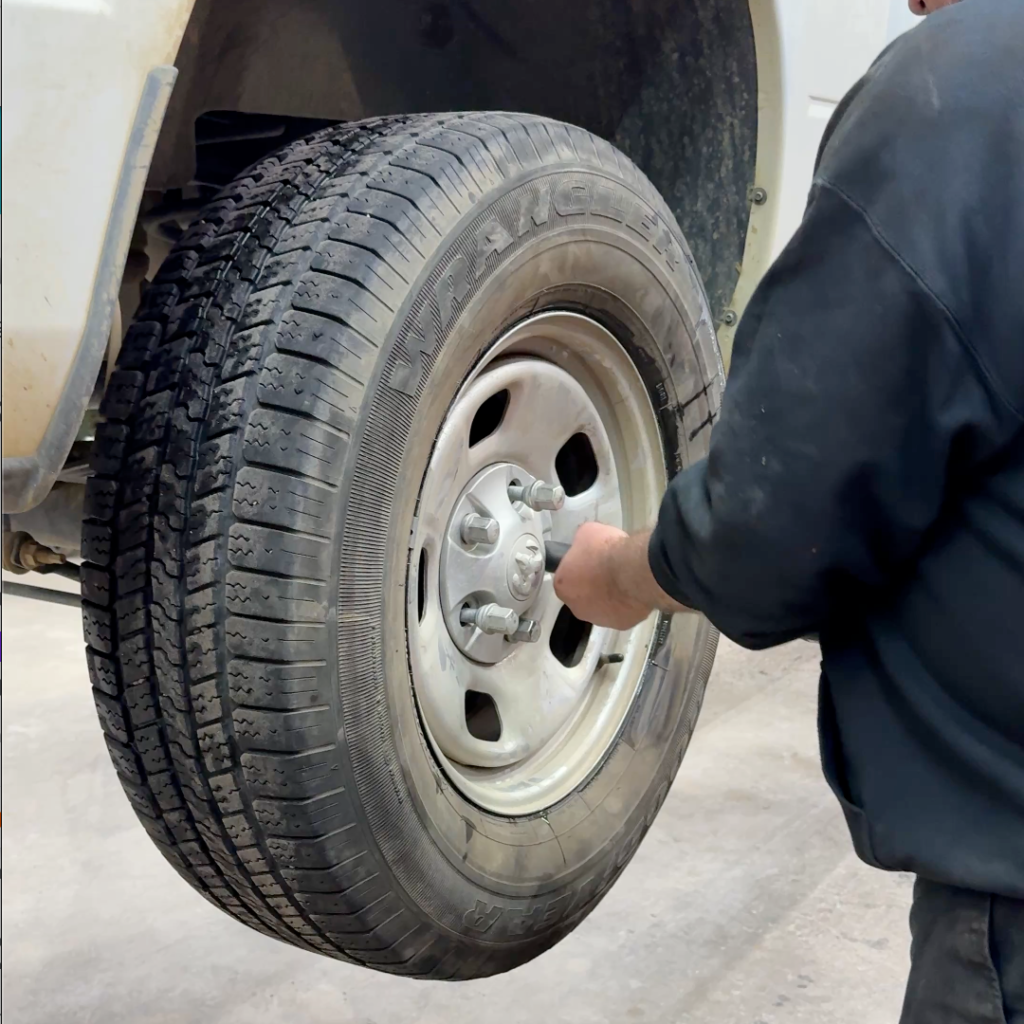
    Then the wheel goes back on your vehicle and gets torqued properly—not “gorilla tight,” not “barely snug,” just manufacturer-approved perfect.


    Why Internal Repairs Are the Real Superheroes

    Because they:

    • Reinforce the area
    • Seal the inner liner
    • Prevent moisture intrusion
    • AND keep the tire safe long-term

    If your tires could talk, they’d request patch-plugs by name. Probably in a deep dramatic movie-trailer voice.


    In Conclusion: Your Tire Is Safe With Us (Literally)

    A flat tire is annoying.
    A bad repair is dangerous.

    Our process fixes the flat and makes sure you don’t end up on the side of the highway questioning your life choices and yelling at inanimate objects.

    Swing by anytime you get a flat—we’ll fix it right, keep you safe, and maybe even have you laughing while you’re here.


    Sandston Automotive

    SMALL TOWN FEEL, BIG TIME SERVICE

    804-737-7206
  • Sticker Time! A Simple Guide to Virginia State Inspections

    Hey there, Virginia drivers!

    If you’ve ever glanced at that little sticker on your windshield and thought, “Wait… was it really a year ago already?” — you’re not alone. The annual Virginia State Inspection sneaks up on all of us. But don’t worry! At Sandston Automotive, we’ve got your back, your brakes, your tires… basically, all of it.


    📌 Quick Disclaimer (Because Laws Like to Change)

    Virginia inspection laws, procedures, and requirements can change from time to time. While we do our best to share accurate, helpful information, this post is meant to prepare you for your inspection and for general education only. For the most up-to-date and official requirements, always refer to the Virginia Code and the Virginia State Police Safety Inspection Manual, or speak directly with a Virginia State Inspection Officer.

    Translation: when in doubt, trust the rulebook — not just the blog 😉


    ✅ What is the Virginia State Inspection?

    In short:
    It’s a yearly safety check required by the Commonwealth of Virginia to make sure your vehicle is safe, road-worthy, and not secretly plotting to strand you on I-95 at rush hour.

    There are 24 inspection points, and while that sounds like a lot, think of it more like a thorough spa day for your car — minus the cucumber water.

    In Detail: Two Types of Inspections

    Virginia requires two main types of inspections for many vehicles:

    *If you live outside of emissions-testing areas (mainly Northern Virginia), like here in Central Virginia, (or drive an older, exempt vehicle), then you only need the safety inspection


    🛠️ What Gets Checked During Your Safety Inspection

    Inspection stations and Inspectors are certified and regulated by the Virginia State Police.  

    Some of the main items include:

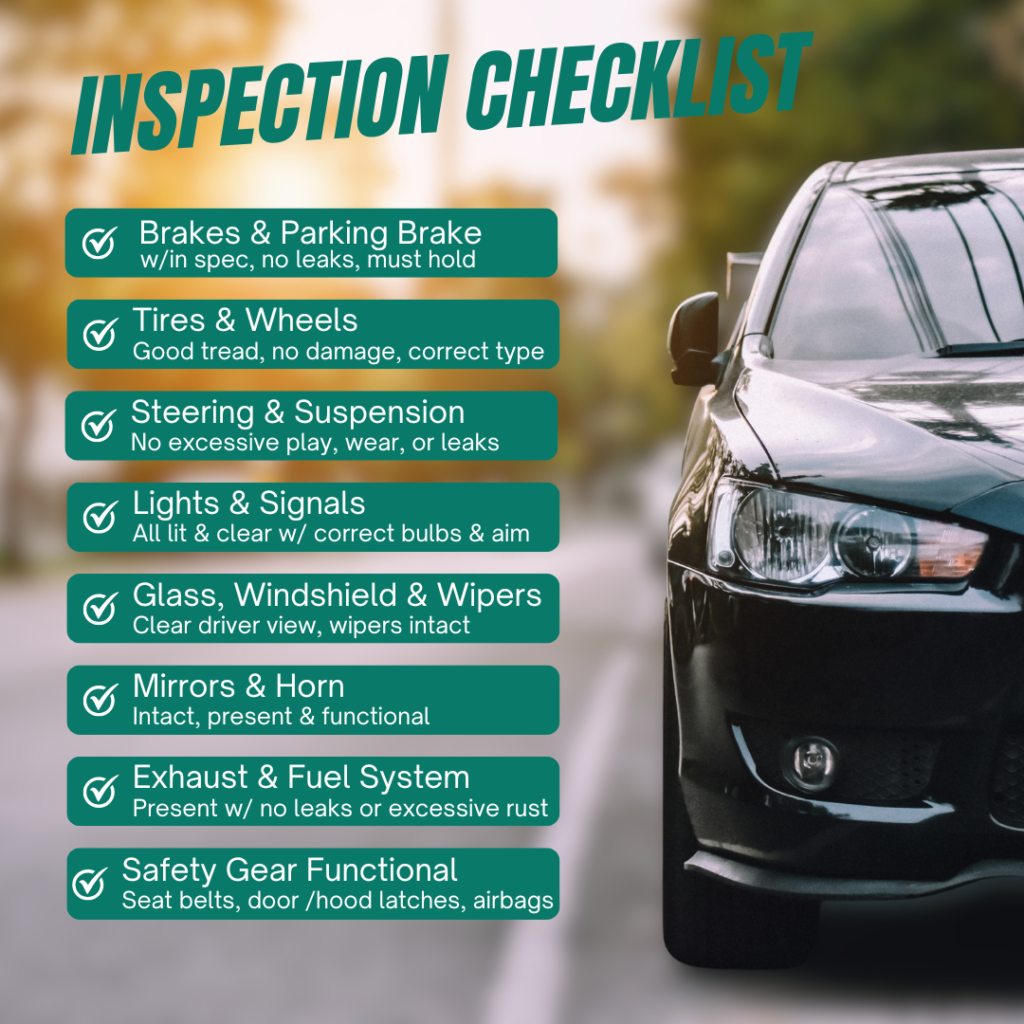
    • Brakes & parking brake — condition of pads/rotors or drums (minimum thickness is 2mm with no excessive pitting, grooving or glazing), fluid level, any leaks.  Parking brake must hold. 
    • Tires & wheels — tread depth (minimum depth is 2mm), damage (no cord or secondary rubber showing or other damage like missing chunks from sidewall or cracks in wheels), correct tire type. 
    • Steering & suspension — checking for play (excessive movement) in joints, worn bushings, loose steering components, shocks/struts (no leaking), and proper alignment. 
    • Lights & signals — headlights, brake lights, turn signals, reverse lamps — all lights working, correct bulbs (turn signals must be amber), lenses clear, and correct aim. 
    • Glass, windshield & wipers — no major cracks or visibility issues*; wipers must be in good working order (torn wipers are a super common failure). 
    • Mirrors — must be present (must have interior and driver side), intact, and give proper rear visibility
    • Horn — must be mounted properly and be loud enough to be heard at 200 feet
    • Exhaust & fuel system — no leaks or major rust, and proper emissions-related components intact
    • Safety gear — seat belts, door latches, hood latch, proper glass, airbags (if equipped), etc.


    📅 How Often You Need an Inspection — and What It Means for You

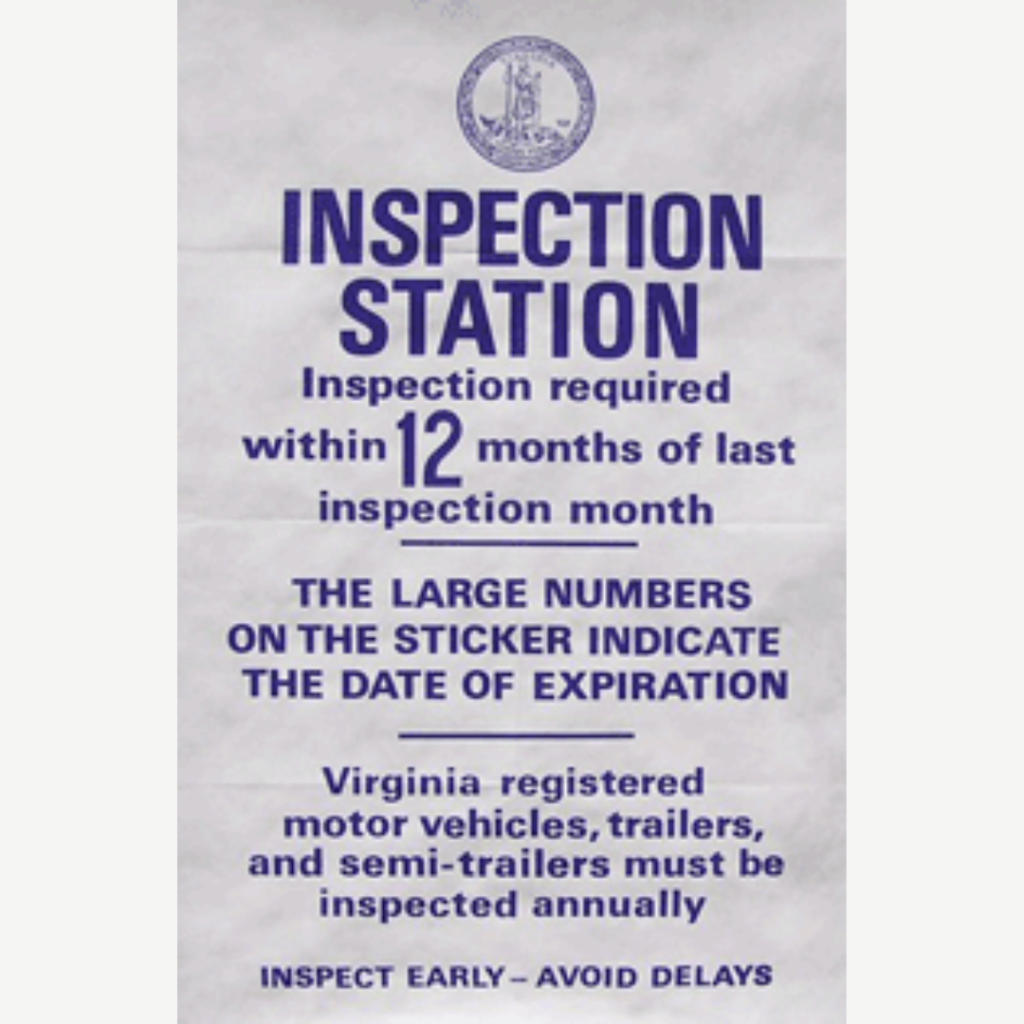
    • In Virginia, your car’s safety checkup is required once every 12 months. Think of it like an annual physical… but for your vehicle, and with fewer awkward conversations. 
    • If you live in certain parts of the state, you’ll also need an emissions inspection every two years. It’s basically your car proving it can behave itself environmentally.
    • And here’s a fun twist: the DMV doesn’t send reminders. Nope. Not a postcard. Not an email. Not even a friendly owl. It’s all on you (but hey, we’re happy to help you keep track!).

    One more important note — your inspection has to be done at a certified inspection station. Not every auto shop is officially allowed to slap that shiny sticker on your windshield, so make sure you’re visiting the real deal.

    Luckily… that’s us!


    ⏱️ How Long Does It Take?

    Typically around 45 minutes — just enough time to grab a coffee, answer a couple emails, or contemplate why all pens disappear from your cup holder.


    🚦 What If My Car Fails?

    No worries! Wear and tear happens. 

    If any of the above systems are unsafe or visibly defective, the car fails the inspection.
    We’ll walk you through what needs fixing, give you honest recommendations, complete the repairs and help you get back on the road safely. 

    If you choose to complete the repairs yourself or elsewhere (totally an option!), your car is issued a rejection sticker.  

    You have a 15-day grace period to handle any repairs and return for a re-inspection of the failed items.


    ✅ Smooth Inspection Checklist

    1. Check your windshield for the current inspection sticker to see the expiration ate
    2. Don’t wait until the last minute. Book your inspection a few weeks early (especially if your car might need repairs).
    3. Bring your registration and payment — $20 for passenger cars ($12 for motorcycles).
    4. If your car fails, get the necessary repairs. We can take care of you in one trip, or arrange the repairs and return for a follow-up inspection. You’ll need to fix only the failed items if you return within the rejection sticker window.
    5. Keep your receipts and certificate handy — especially if you’re moving or buying/selling a car.


    🛞 Looking Out for You and Your Ride

    At Sandston Automotive, we believe state inspections are more than just stickers — they represent a basic safety check that helps keep you, your family, and your community safer on Virginia roads. Think of it like an annual “tune-up” for your car’s safety systems.

    If you’re due for an inspection (or have questions about what’s required), bring your car by — we’re certified and ready to help you pass with flying colors.

    Sandston Automotive

    SMALL TOWN FEEL, BIG TIME SERVICE

    804-737-7206
  • Why Good Shops Turn Away Bad Work: Integrity in Auto Repair

    Google Review:
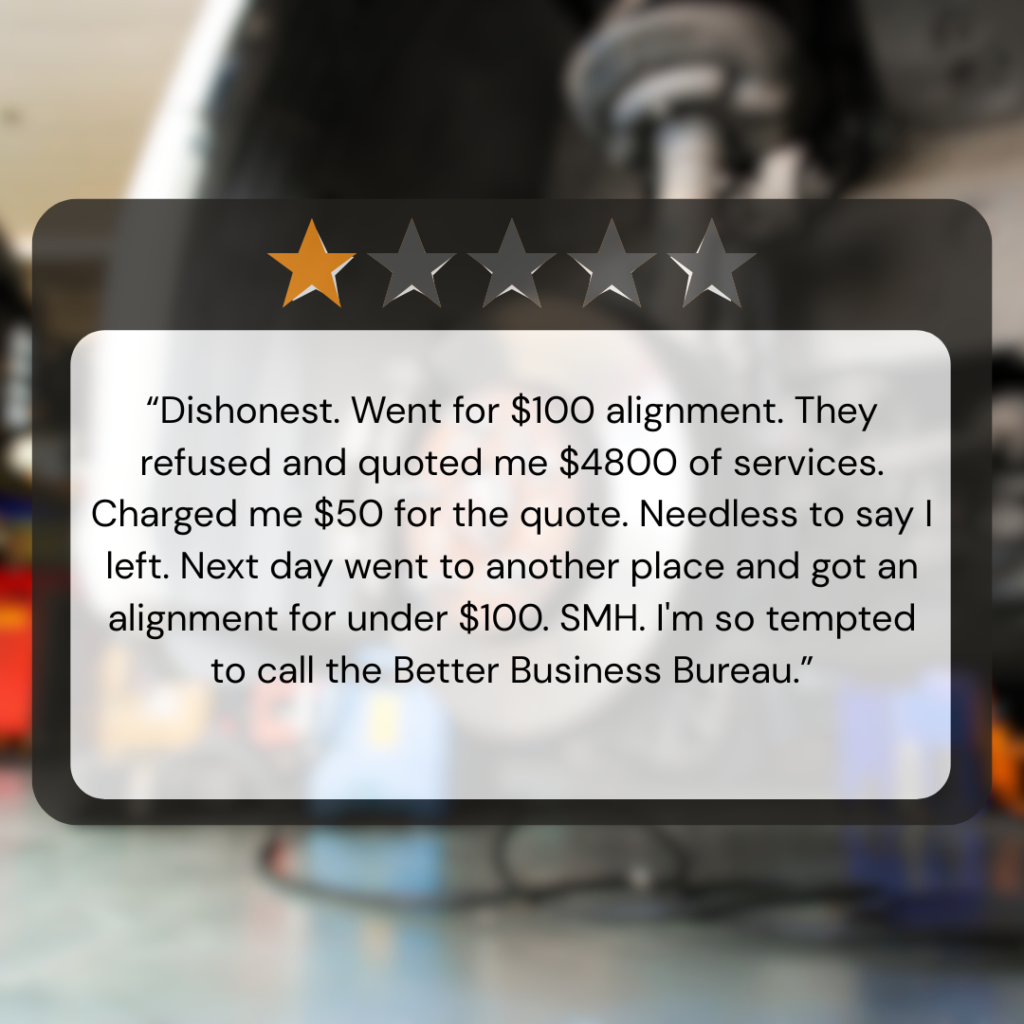
    “Dishonest. Went for $100 alignment. They refused and quoted me $4800 of services. Charged me $50 for the quote. Needless to say I left. Next day went to another place and got an alignment for under $100. SMH. I’m so tempted to call the Better Business Bureau.”


    🪼 Seeing a review like this stings — not because we did anything wrong, but because it shows a customer left without understanding why we couldn’t do the work they requested. And if there’s one thing good shops try to avoid, it’s misunderstandings.

    So let’s talk about it openly:
    Honest auto shops turn away work.
    Not because we don’t want to help, but because we refuse to do unsafe, incomplete, or misleading repairs — even when those repairs are exactly what someone thinks they came in for.


    Why We Sometimes Say “No” — And Why It’s the Honest Choice

    Starting with the Alignment Review

    1. When a “Repair” Isn’t Safe, It Isn’t Ethical

    An alignment isn’t just “straightening the wheels.” It’s a precision service that depends on suspension and steering components being solid and functioning correctly.

    If those parts are:

    • Bent
    • Broken
    • Loose
    • Severely worn
    • Rusted beyond safe adjustment

    …then an alignment cannot be performed correctly.

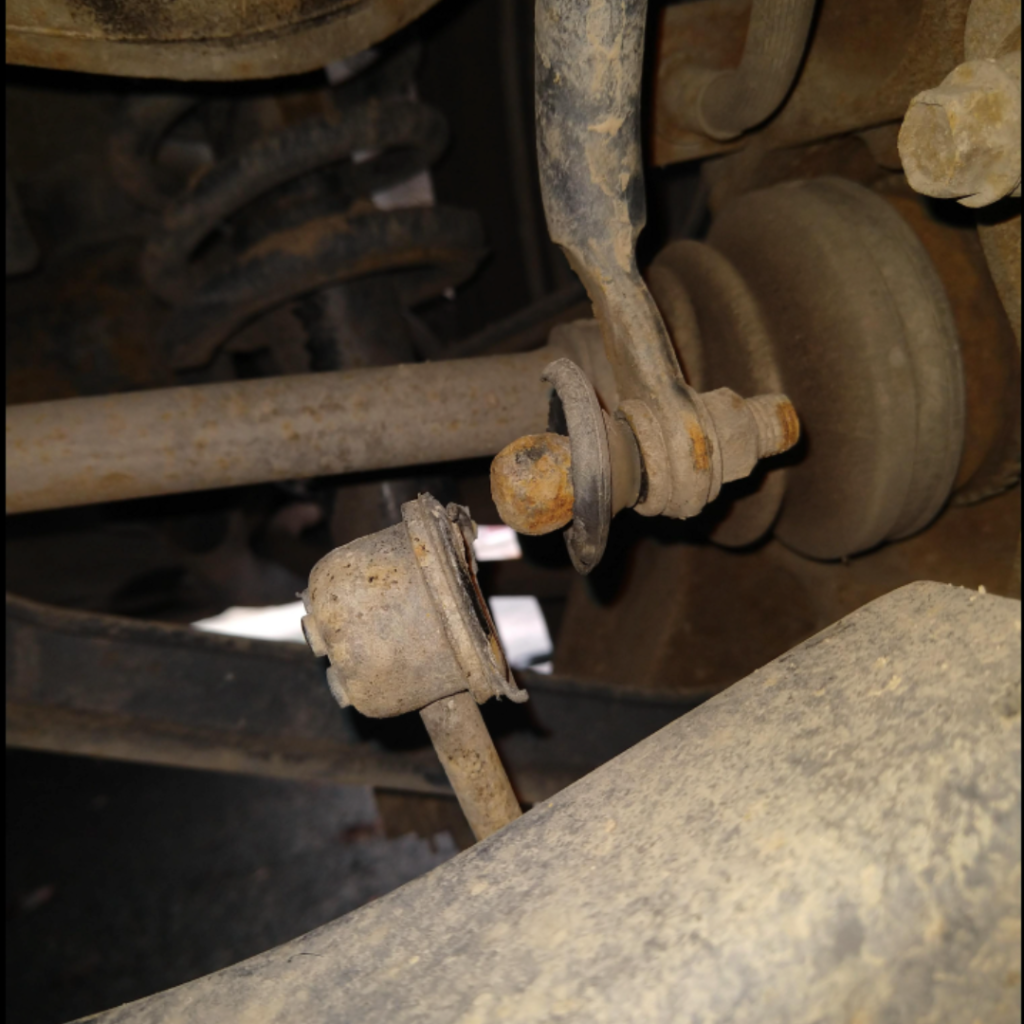
    In the review above, the vehicle had multiple safety issues that prevented a proper alignment, more importantly, an alignment would not fix the underlying issue. These included excessively worn and loose front control arm bushings and sway bar links, loose ball joints, and a bent rear control arm – among other issues. 

    Attempting an alignment anyway would lead to:

    • Rapid tire wear
    • Unsafe handling
    • The car still pulling or wandering
    • A false sense of safety
    • Liability for everyone involved

    So when we inspect a vehicle and find major issues — sometimes several thousand dollars’ worth — the ethical choice is to stop, explain the findings, and decline the alignment until the problems are corrected.

    Doing the alignment anyway for a quick $100? 

     That would be dishonest.This same mindset and transparency applies to all the work we do.


    “But another shop aligned it…”

    Unfortunately, some places will perform a minimal “toe set,” print an alignment sheet, and send you out the door. It’s fast. It’s cheap. It’s not the full service you think you’re getting.

    It often ignores:

    • Worn ball joints
    • Failing tie rods
    • Damaged control arms
    • Bent suspension & steering components
    • Loose bushings
    • Frame or subframe issues

    Will the car technically drive straighter for a moment? Sure, possibly.
    Will it stay aligned? No.
    Is it safe? That depends — and we’re not willing to gamble with your safety.


    2. We Refuse “Band-Aid Repairs” 🩹

    Sometimes people want the quickest or least expensive fix possible. We understand that — but band-aid repairs come at a cost.

    They often lead to:

    • Repeat breakdowns
    • Wasted money
    • Bigger future repairs
    • Unsafe driving conditions

    If a requested shortcut doesn’t solve the real problem — or makes the situation unsafe — we’ll turn the work away rather than take your money for something we know won’t help.


    3. We Don’t Install Used Parts

    While we’re willing to install customer-supplied new parts, we do not install used or previously installed components.

    Used parts come with too many unknowns, including:

    • Hidden wear or internal damage
    • Previous improper installation
    • Shortened remaining lifespan
    • Higher risk of immediate or catastrophic failure

    Even when a used part “looks fine,” there’s no reliable way to verify its history or safety. Installing used components puts you — and us — at risk, and it’s something we won’t compromise on.

    This policy reinforces our commitment to no shortcuts, no temporary fixes, and repairs done responsibly.


    4. We Won’t Guarantee Customer-Supplied Parts

    We understand some customers prefer to supply their own parts, and we’re willing to work with you — with clear understanding and expectations.

    When we don’t source the part ourselves, too many variables are out of our control.

     When sourcing the part we can:

    • Guarantee the quality
    • Verify the correct fit
    • Offer a warranty on the part AND labor
    • Ensure the quality of the part and that it’s built to last

    Installing a part we didn’t supply means the repair carries unknown risks, and we won’t gamble on safety or reliability. We’re happy to perform the installation with the understanding that the repair is not guaranteed or warrantied in any way.

    Transparency up front ensures no one is rolling the dice on safety.

    No guesswork. No gamble.


    5. We Won’t Take On Jobs We Can’t Complete Properly

    If a repair requires specialized equipment, software we don’t carry, or manufacturer-specific expertise another shop is better equipped for, we’ll tell you — not guess, not experiment, and not waste your time.

    A good shop knows its limits and protects your vehicle by respecting them.


    Turning Away Work Isn’t About Money — It’s About Integrity

    Some people assume shops recommend repairs just to pad the bill. In reality, reputable shops do the opposite:
    We turn away profitable work when it isn’t the right repair.

    Why?

    Because we value:

    • Your safety
    • Our reputation
    • The long-term health of your vehicle
    • Ethical, Honest and professional standards

    We’d rather lose a job today than do something unsafe or dishonest.


    Bottom Line

    When we decline an alignment — or any repair — it’s not because we’re trying to upsell. It’s because the vehicle needs real attention before the requested service can be safely completed.

    Saying “yes” to everything might make people happy in the moment, but it isn’t ethical or safe.

    Integrity means doing the right repair, not the easy one.

    And that’s why good shops turn away bad work.

    Sandston Automotive

    SMALL TOWN FEEL, BIG TIME SERVICE

    804-737-7206
  • Welcome to Sandston Automotive!

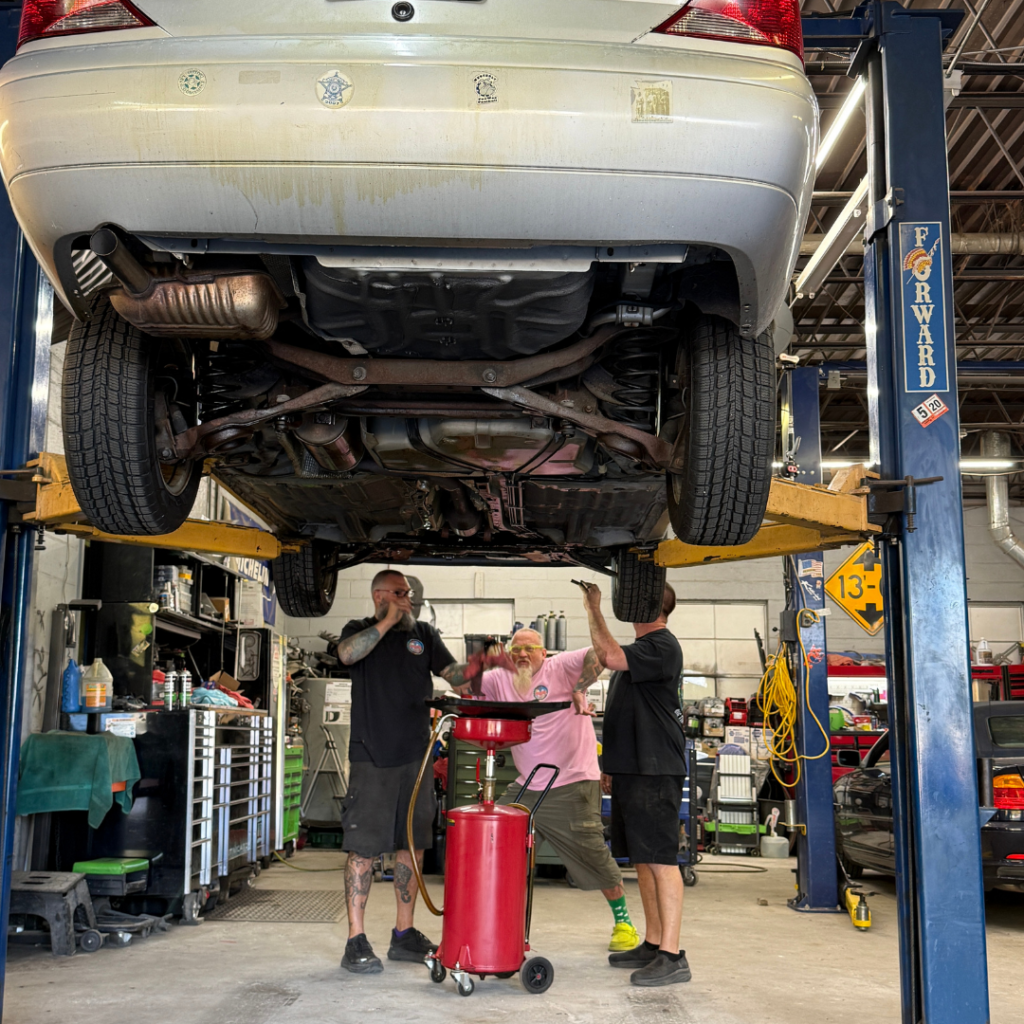
    At Sandston Automotive, we believe an auto repair shop should feel like more than just a place to drop off your car—it should feel like a place you can trust. As a family-owned and operated shop, we’ve built our reputation on honest work, clear communication, and treating every customer like a neighbor. That’s the heart of what we mean by small town feel, big time service.

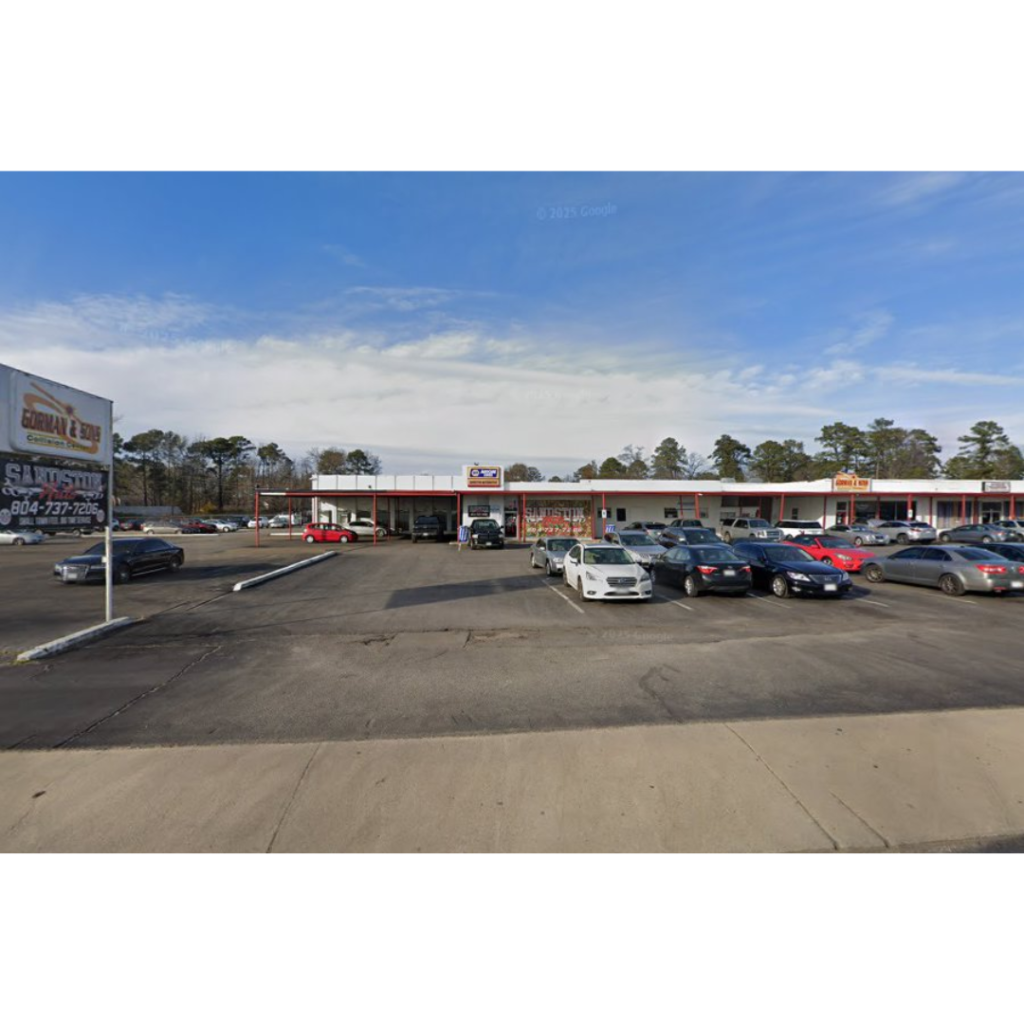
    Located in Sandston, Va across from Richmond International Airport, our mechanics have over 40 years experience in keeping vehicles safe, reliable, and on the road.

    From routine maintenance to complex repairs, we’re a full-service auto shop equipped with the tools, knowledge, and hands-on experience to handle just about anything your vehicle needs. Technology may have changed over the decades, but our commitment to quality workmanship and doing the job right the first time has not.

    Whether you’re stopping in for an oil change or facing a major repair, you can expect straightforward answers, dependable service, and a team that truly cares about your vehicle and your safety. At Sandston Automotive, you get the personal attention of a hometown shop—backed by decades of expertise you can count on.

    So when your car needs attention, come see us or give us a call. We’re always happy to answer questions, take a look, or help you plan your next service. Stop by the shop, schedule an appointment, or just say hello!

    Around here, relationships matter just as much as reliable repairs.

    Sandston Automotive

    SMALL TOWN FEEL, BIG TIME SERVICE

    804-737-7206